
What Rotterdam is for
Rotterdam is Europe's largest container gateway, with deep-sea terminals on Maasvlakte handling the biggest vessels afloat and a separate set of inland facilities upriver.
How cargo leaves the gateway
Barge on the Rhine reaches Germany and Switzerland, rail runs east, and road covers the Benelux. A large share of what lands is not destined for the Netherlands at all.
How containers actually move inland
North European gateways sit at the head of a dense multimodal hinterland, and a container discharged from a mainline vessel very often has further modes to travel. Barge, rail, feeder, and short-sea connections all carry volume inland or onward to smaller ports. This is the defining characteristic of the region: the ocean arrival is a handover point, not a destination, and treating it as the end of the journey consistently understates the remaining time.
- Barge and rail carry substantial inland volume from the main gateways
- Feeder and short-sea services move boxes onward to smaller ports
- Deep-sea terminals and inland terminals are operationally distinct
- A single import can involve several modes after the ocean leg
Where free time is won or lost
The onward connection is where time disappears. A container can be discharged promptly and then wait for a barge slot or rail booking, and that wait is invisible if the only thing being watched is the ocean ETA. Because the inland leg is itself a scheduled service rather than an on-demand truck, missing a connection usually means waiting for the next one.
- Onward barge and rail run to schedules, so a missed slot means a real wait
- Terminal storage terms run while the onward connection is arranged
- Equipment is only released from detention once the empty is returned
The Rotterdam detail teams miss
Deep-sea discharge is a handover, not an arrival. If the destination is inland Europe, the barge or rail booking after discharge is what actually determines delivery.
Terminals at Rotterdam
Free-time terms, appointment systems, and gate hours are set per terminal, not per port. Knowing which facility worked the vessel is what makes a pickup plan realistic, and it is the detail most often missing when a container is already accruing charges.
- APM Terminals Maasvlakte II
Lanes arriving at Rotterdam
Where a container started shapes how it behaves on arrival. A direct sailing and a transshipped move can discharge on the same day and still need completely different follow-up, so the inbound lane is worth knowing before the box lands.
- Qingdao to Rotterdam
- Busan to Rotterdam
- Port Klang to Rotterdam
- Laem Chabang to Rotterdam
- Mundra to Rotterdam
Tracking a Rotterdam container in CargoScope
Add the container, Bill of Lading, or booking number once and the arrival, discharge, availability, and outgate events arrive on a single record, with ETA changes kept beside the milestones they affect. One Tracking Credit covers the shipment through its full lifecycle.
What you'll see in CargoScope
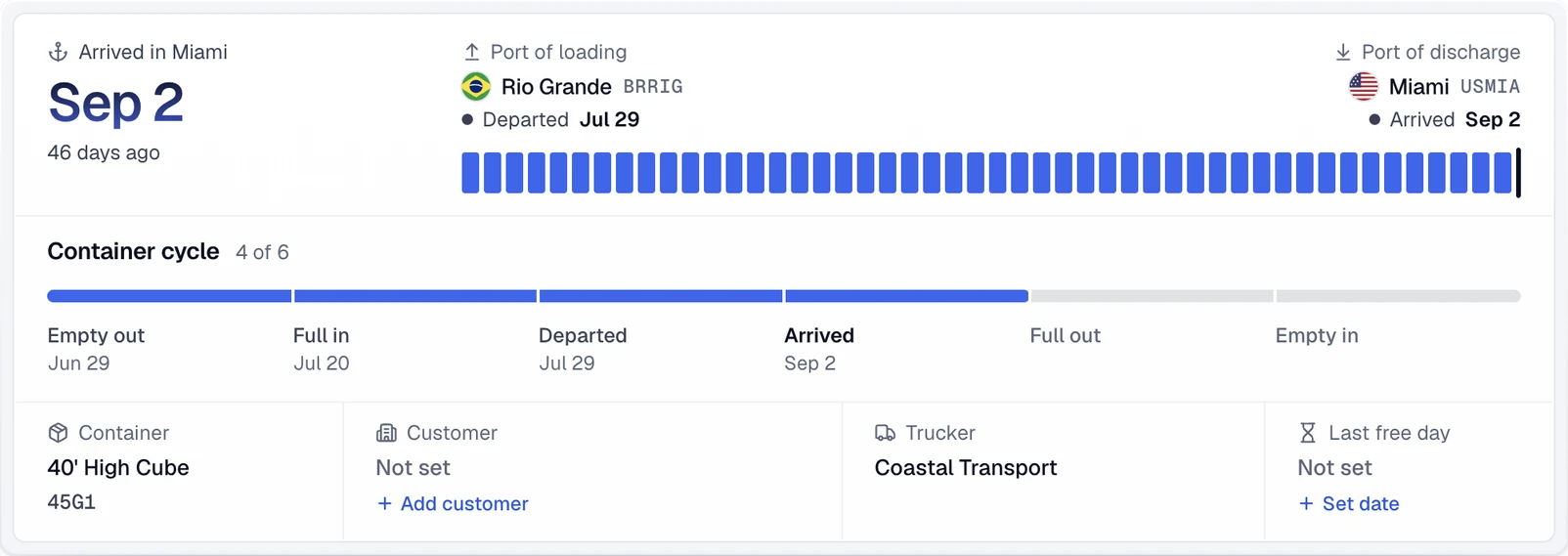
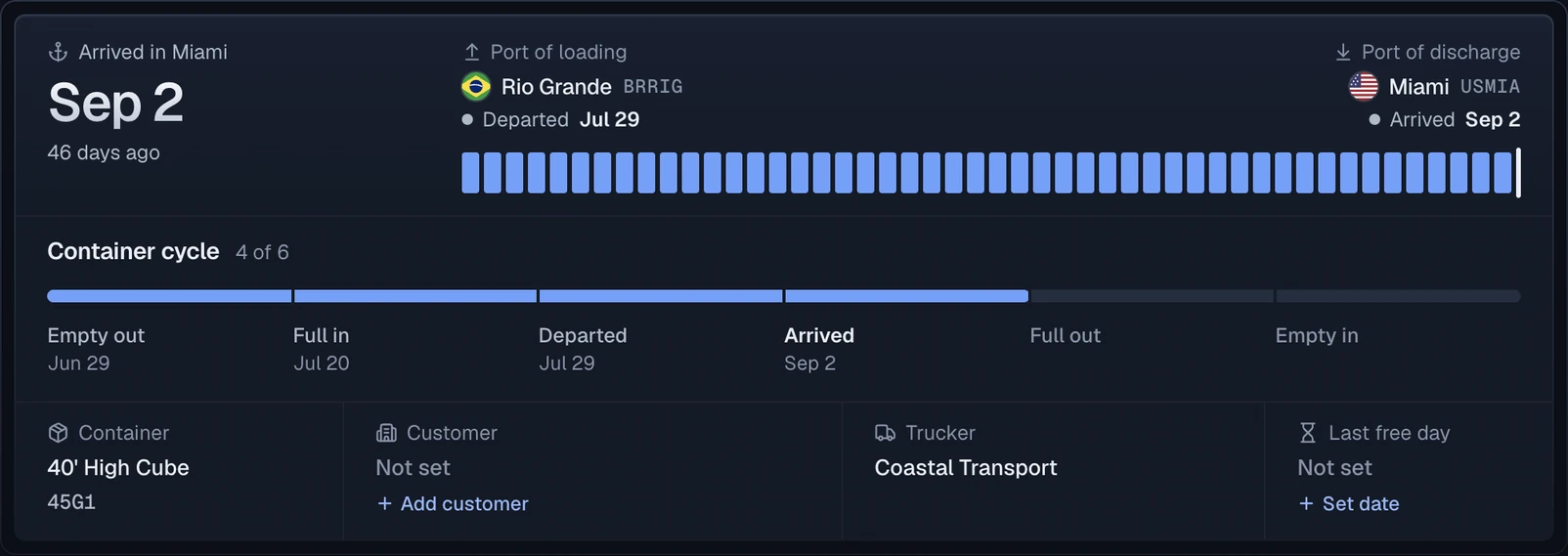
A container discharged at Rotterdam shows the port of discharge and the final destination as separate stops, so the move after the vessel stays on the same record.
Questions
What should I know about Rotterdam before booking through it?
Rotterdam is Europe's largest container gateway, with deep-sea terminals on Maasvlakte handling the biggest vessels afloat and a separate set of inland facilities upriver.
How do containers move inland from Rotterdam?
Barge on the Rhine reaches Germany and Switzerland, rail runs east, and road covers the Benelux. A large share of what lands is not destined for the Netherlands at all.
What gets missed when tracking a Rotterdam container?
Deep-sea discharge is a handover, not an arrival. If the destination is inland Europe, the barge or rail booking after discharge is what actually determines delivery.
The vessel discharged — why is delivery still days away?
In North Europe the ocean leg often ends at a deep-sea terminal that is not the final destination. Barge, rail, or feeder services carry the container onward, and those run to their own schedules.
Should the inland leg be tracked separately?
Yes. The ocean movement and the barge or rail movement have different timings and different failure modes, and combining them into a single ETA hides where the container actually is.
Can I track a container by container number?
Yes. CargoScope is designed to help users track ocean containers by container number and monitor shipment visibility from one dashboard.