
What Los Angeles is for
Los Angeles shares the San Pedro Bay complex with Long Beach, and the two are separate port authorities working adjacent water. A vessel booked to "LA/LB" can berth at either, so the terminal on the shipment record, not the port name, is what tells you where to send a driver.
How cargo leaves the gateway
Volume splits between local Inland Empire warehousing and rail moves to Chicago, Dallas and Memphis. The Alameda Corridor carries rail traffic inland from both San Pedro Bay ports, which is why a rail-bound box behaves the same whether it landed in Los Angeles or Long Beach.
How containers actually move inland
West Coast gateways handle a large share of direct transpacific calls, and a significant portion of that volume leaves by rail rather than by local truck. That split matters for tracking, because a container routed to an inland point behaves nothing like one going to a local warehouse. The rail-bound box waits for assignment to a train, while the local box waits for a drayage appointment, and those two waits fail for entirely different reasons.
- Direct transpacific calls, so arrival events are usually clean to read
- A large share of volume departs by rail to inland points
- Local delivery depends on drayage appointments and chassis supply
- Rail-bound and truck-bound containers need different follow-up
Where free time is won or lost
The costly gap is between discharge and outgate. A container can be discharged, sitting in the yard, and still not be available for pickup, while free time counts down regardless. Teams that watch only vessel arrival tend to find out about the problem when the invoice arrives. Watching discharge and availability as separate events is what makes the exposure visible early enough to act on.
- Discharge typically starts the clock; availability decides when you can move
- Outgate confirms the box left, which is what actually stops demurrage
- Empty return closes detention exposure on the equipment
The Los Angeles detail teams miss
Because two authorities and many terminals serve one bay, the single most useful field is the discharge terminal. Everything downstream — appointment system, free time, gate hours — is set there rather than at port level.
Terminals at Los Angeles
Free-time terms, appointment systems, and gate hours are set per terminal, not per port. Knowing which facility worked the vessel is what makes a pickup plan realistic, and it is the detail most often missing when a container is already accruing charges.
- APM Terminals Pier 400
- Fenix Marine Services
- Everport Terminal Services
- Yusen Terminals
- West Basin Container Terminal
- TraPac Los Angeles
- China Shipping Terminal
Lanes arriving at Los Angeles
Where a container started shapes how it behaves on arrival. A direct sailing and a transshipped move can discharge on the same day and still need completely different follow-up, so the inbound lane is worth knowing before the box lands.
- Shanghai to Los Angeles
- Shenzhen to Los Angeles
- Ho Chi Minh City to Los Angeles
- Mundra to Los Angeles
- Hong Kong to Los Angeles
- Tanjung Pelepas to Los Angeles
- Callao to Los Angeles
Tracking a Los Angeles container in CargoScope
Add the container, Bill of Lading, or booking number once and the arrival, discharge, availability, and outgate events arrive on a single record, with ETA changes kept beside the milestones they affect. One Tracking Credit covers the shipment through its full lifecycle.
What you'll see in CargoScope
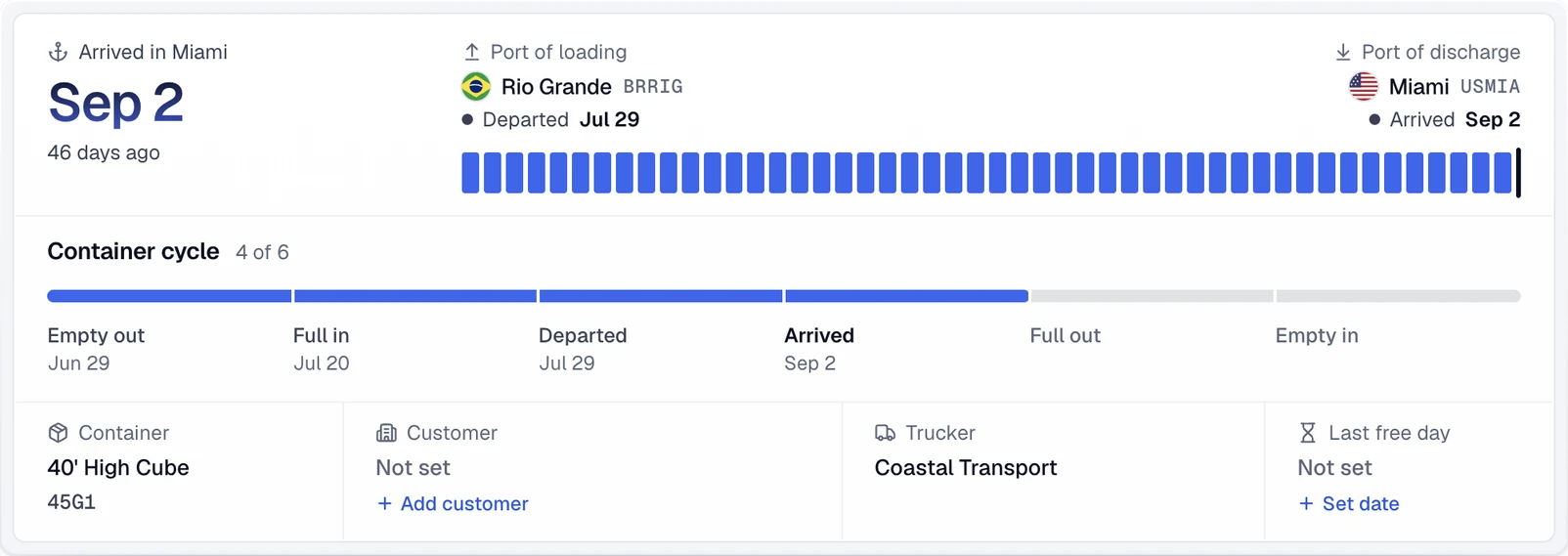
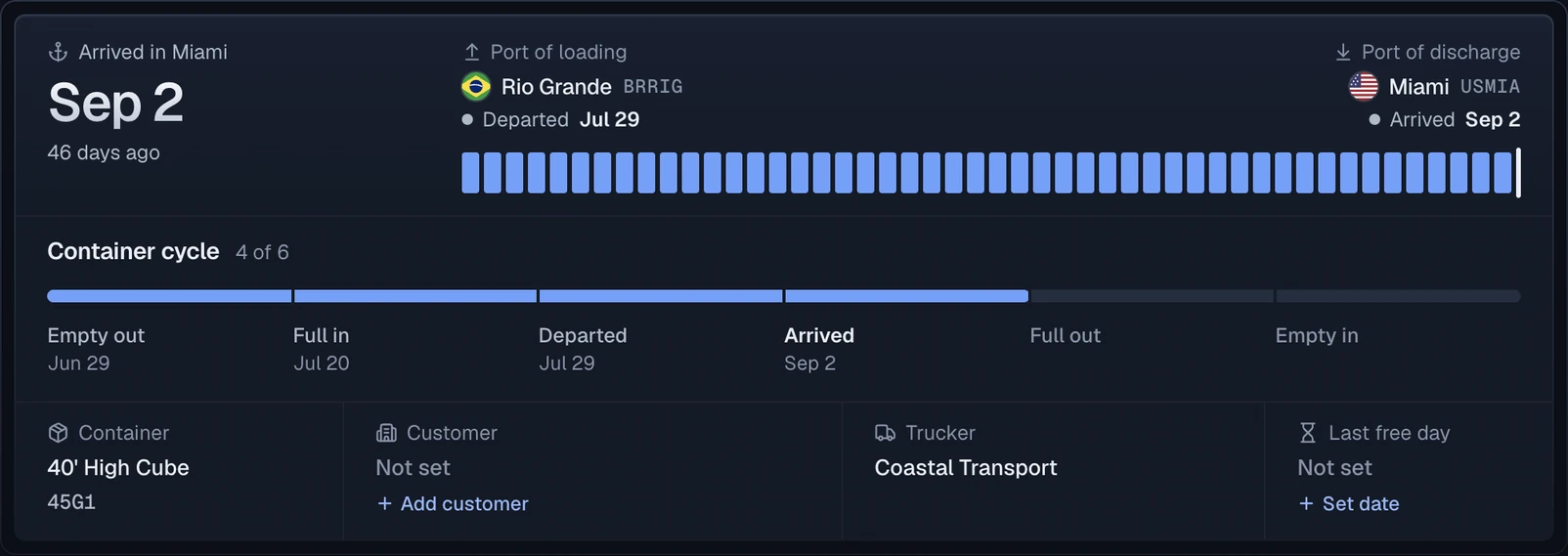
A container discharged at Los Angeles shows the port of discharge and the final destination as separate stops, so the move after the vessel stays on the same record.
Official sources
Questions
What should I know about Los Angeles before booking through it?
Los Angeles shares the San Pedro Bay complex with Long Beach, and the two are separate port authorities working adjacent water. A vessel booked to "LA/LB" can berth at either, so the terminal on the shipment record, not the port name, is what tells you where to send a driver.
How do containers move inland from Los Angeles?
Volume splits between local Inland Empire warehousing and rail moves to Chicago, Dallas and Memphis. The Alameda Corridor carries rail traffic inland from both San Pedro Bay ports, which is why a rail-bound box behaves the same whether it landed in Los Angeles or Long Beach.
What gets missed when tracking a Los Angeles container?
Because two authorities and many terminals serve one bay, the single most useful field is the discharge terminal. Everything downstream — appointment system, free time, gate hours — is set there rather than at port level.
Why is a discharged container still not available?
Discharge means the box came off the vessel. Availability means the terminal has positioned it, cleared any hold, and opened it for pickup. The gap between the two is normal, and it is where most free-time exposure on this coast is created.
Does a rail-bound container need different tracking?
Yes. It waits for train assignment rather than a drayage appointment, and its next meaningful event is a rail departure or an inland ramp arrival. Treating it like a local delivery hides the actual constraint.
Can I track a container by container number?
Yes. CargoScope is designed to help users track ocean containers by container number and monitor shipment visibility from one dashboard.