
Why rail container tracking matters
Many import containers do not stop being operationally risky after vessel discharge. Inland rail movement, ramp dwell, availability timing, outgate planning, and delivery appointments can all change the customer-facing timeline.
- Rail departure and arrival context where available
- Ramp availability and inland handoff visibility
- ETA changes that affect drayage, warehouse, and customer plans
Keep the rail leg connected to the shipment
CargoScope starts with the container number and keeps available milestones in one workflow, so teams do not have to treat ocean, rail, and truck handoffs as separate manual lookups.
Use rail visibility to prioritize exceptions
A practical rail tracking workflow helps teams review changed ETAs, missing inland milestones, containers waiting at ramps, and shipments that need a customer or dispatch update.
Current tracking scope
CargoScope starts with the container number and shows available rail or inland milestones when shipment data includes them, keeping the inland handoff attached to the ocean shipment timeline.
What you'll see in CargoScope
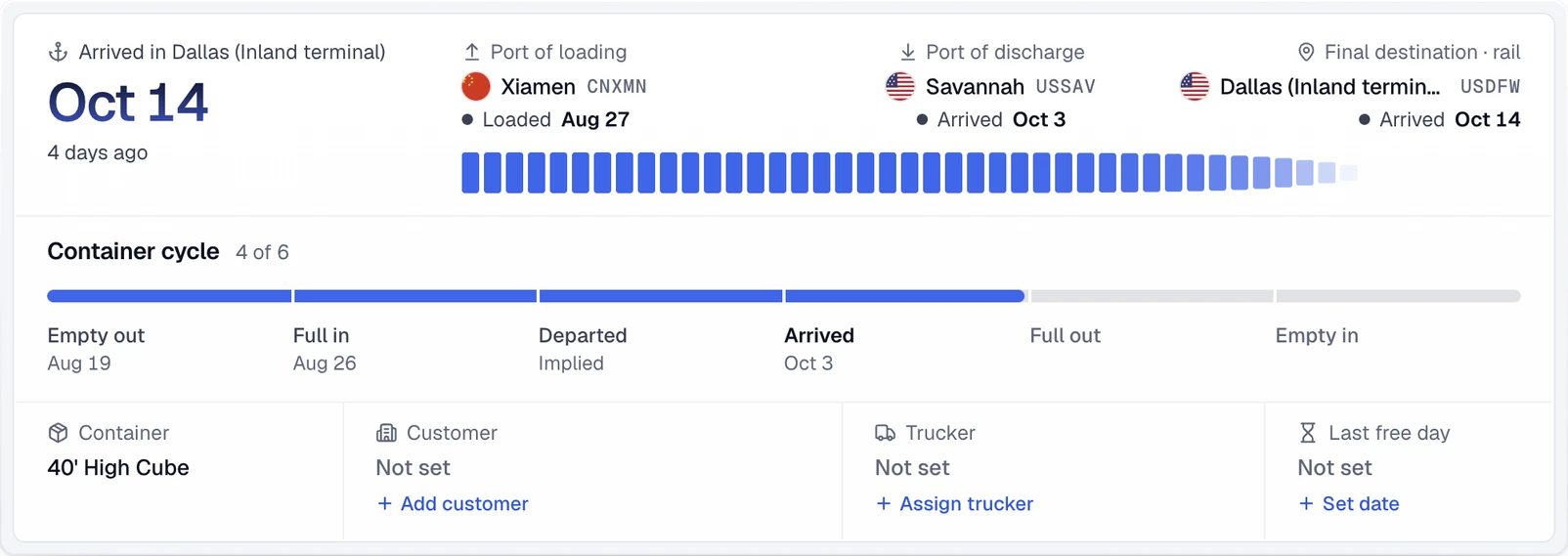
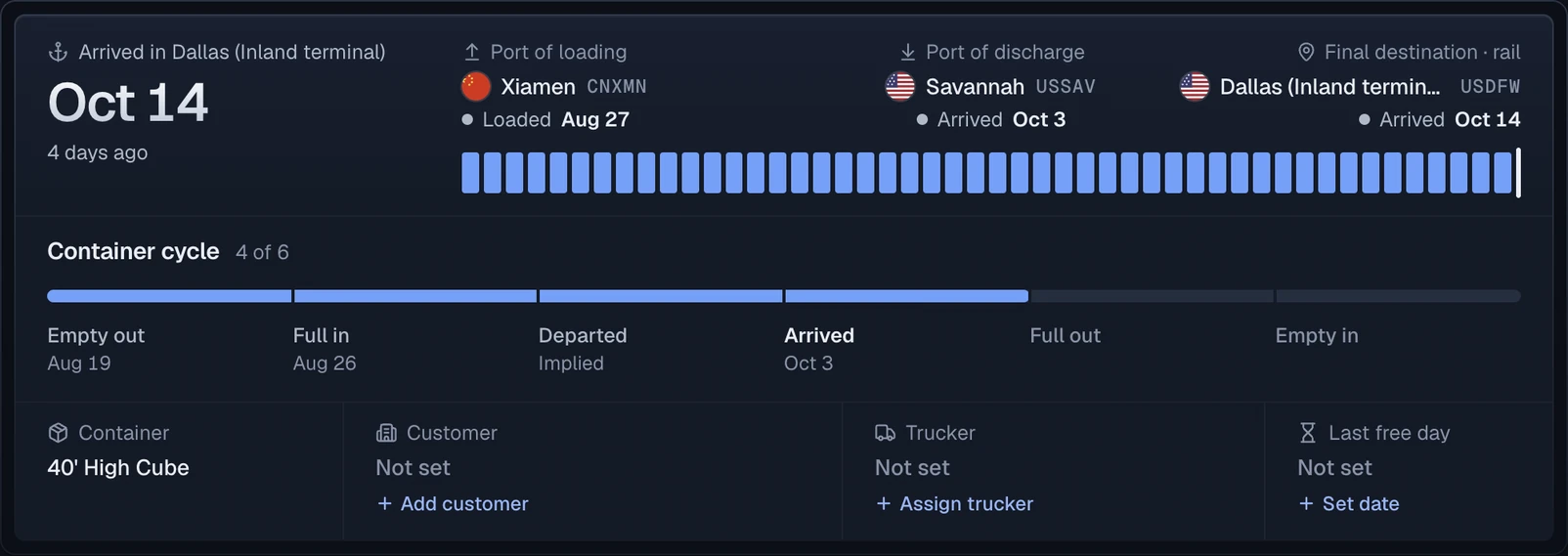
The journey summary keeps the port of discharge and the final destination apart: the sample shipment discharges at an ocean port and continues inland by rail. The confirmed inland arrival stays separate from the port milestone.
Questions
How do I track a rail container move?
Start with the container number in CargoScope. The workflow keeps available ocean, rail, port, and delivery milestones tied to the same shipment record.
Does CargoScope replace every rail carrier portal?
No. CargoScope centralizes available shipment updates and rail context where available. It does not claim official rail carrier partnership coverage or invent unavailable rail events.
Which rail carriers should freight teams watch?
U.S. inland container moves commonly involve networks such as BNSF, Union Pacific, Norfolk Southern, CSX, CN, and CPKC depending on the lane and carrier routing.