
What Salalah is for
Salalah sits on Oman's Indian Ocean coast outside the Strait of Hormuz, which makes it usable as a hub without entering the Gulf.
How cargo leaves the gateway
The local Omani market is small; the port functions principally as a transshipment point.
How containers actually move
Middle East gateways combine local import demand with a substantial transshipment and re-export role, connecting long-haul services to regional feeder networks reaching the Gulf, the Red Sea, the Indian subcontinent, and East Africa. A container calling here may be destined for the local market, waiting to be re-exported, or simply changing vessels, and free-zone arrangements can add their own handling steps.
- Significant transshipment and re-export role alongside local imports
- Feeder networks reach the Gulf, Red Sea, subcontinent, and East Africa
- Free-zone arrangements can add handling and documentation steps
- Position near major trade routes makes the region routing-sensitive
Where time is won or lost
As with any hub, the connection carries the risk. A container awaiting onward feeder capacity is neither delayed in the ordinary sense nor progressing, and only the presence or absence of a load event distinguishes the two. For local imports, ordinary terminal storage and equipment terms apply once the box is available.
- Connection risk dominates for transshipped and re-exported boxes
- Local imports run conventional storage and detention terms
- A discharge with no onward load is the signal worth acting on
The Salalah detail teams miss
Its position outside the Gulf is the point of it. Containers here are usually waiting for onward capacity rather than local delivery.
Tracking a Salalah container in CargoScope
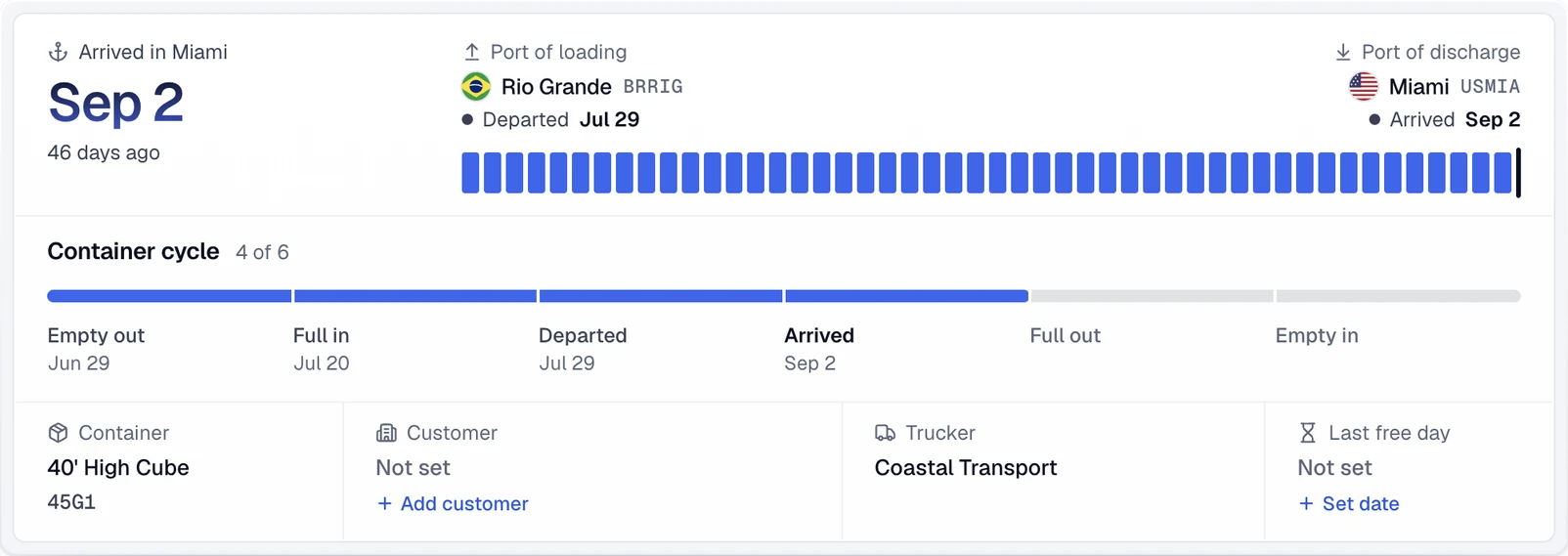
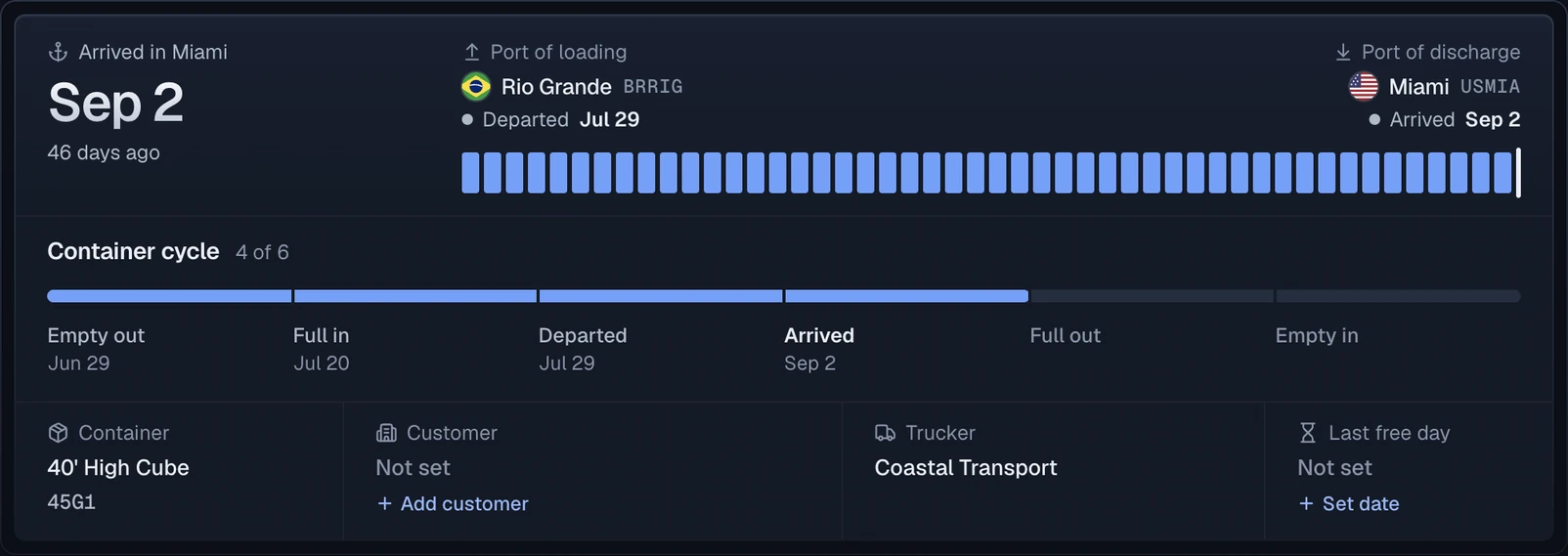
Add the container, Bill of Lading, or booking number once and the arrival, discharge, availability, and outgate events arrive on a single record, with ETA changes kept beside the milestones they affect. One Tracking Credit covers the shipment through its full lifecycle.
What you'll see in CargoScope
A container discharged at Salalah shows the port of discharge and the final destination as separate stops, so the move after the vessel stays on the same record.
Questions
What should I know about Salalah before booking through it?
Salalah sits on Oman's Indian Ocean coast outside the Strait of Hormuz, which makes it usable as a hub without entering the Gulf.
How do containers move inland from Salalah?
The local Omani market is small; the port functions principally as a transshipment point.
What gets missed when tracking a Salalah container?
Its position outside the Gulf is the point of it. Containers here are usually waiting for onward capacity rather than local delivery.
Is a call at a Middle East hub an arrival?
Not necessarily. These ports handle a large volume of transshipment, so a discharge is often a connection. Whether a load event follows tells you which case you are in.
Does re-export change the tracking picture?
It can add handling and documentation steps between discharge and onward loading, so the container may be stationary for reasons that are procedural rather than capacity-related.
Can I track a container by container number?
Yes. CargoScope is designed to help users track ocean containers by container number and monitor shipment visibility from one dashboard.