
What is particular about Busan to Charleston
A long all-water routing to the US Southeast where Busan's hub role means the container may have transshipped before the mainline leg even starts. Charleston has been consolidating operations between its terminals, so the facility working this service can change between sailings rather than staying fixed.
The milestone that decides the cost
Watch the transshipment leg. On this corridor the difference between an estimated onward sailing and a confirmed load onto the second vessel is where plans quietly break. A container that has been discharged at a hub but not yet loaded onward is the single most useful thing to surface, because it is both recoverable and invisible in a simple ETA field.
- Separate the estimated onward sailing from a confirmed load event
- Treat a long gap after hub discharge as a signal, not as normal
- Re-check the arrival window after any routing change
Where the container lands at Charleston
Which terminal works the vessel changes what happens next: free-time terms, appointment systems, and rail access are set per terminal rather than per port. Two containers off the same vessel can behave differently for that reason alone, so it is worth knowing the destination facility before planning the pickup.
- Wando Welch Terminal
- North Charleston Terminal
- Hugh K. Leatherman Terminal
Tracking this lane in CargoScope
Add the container, Bill of Lading, or booking number once and the milestones above arrive on one record, with ETA changes kept beside the events they affect. One Tracking Credit covers the shipment for its whole lifecycle, so watching a long or transshipped move costs the same as a short direct one.
What you'll see in CargoScope
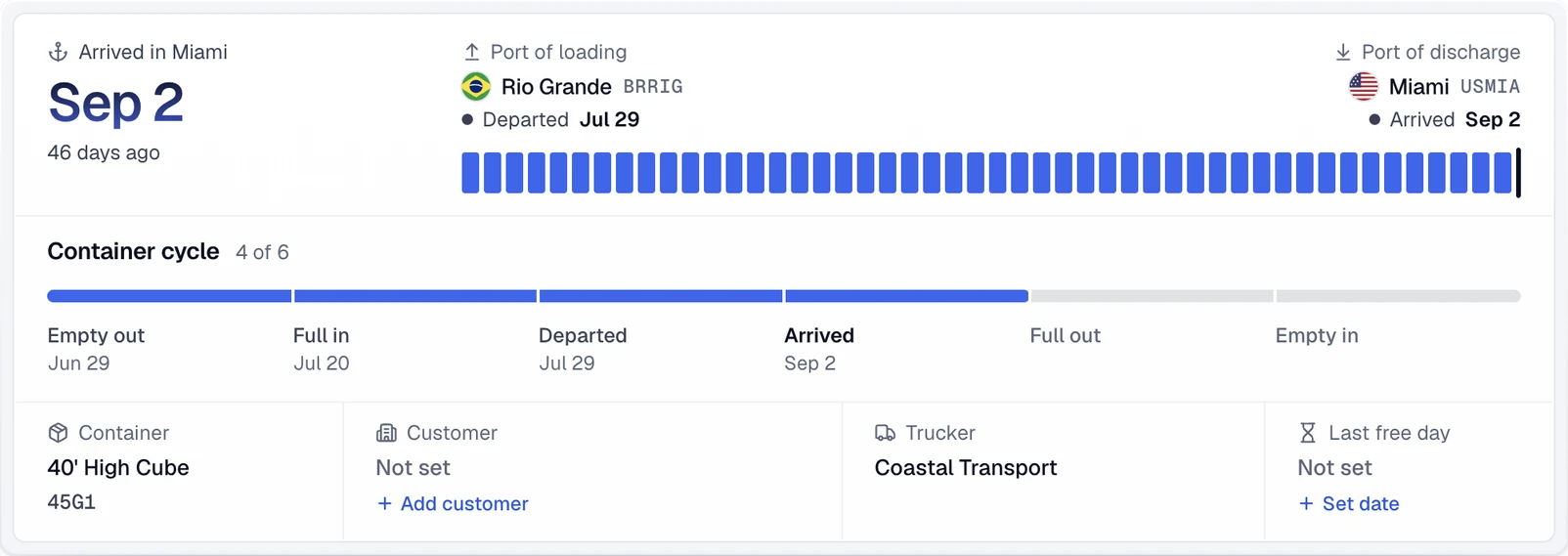
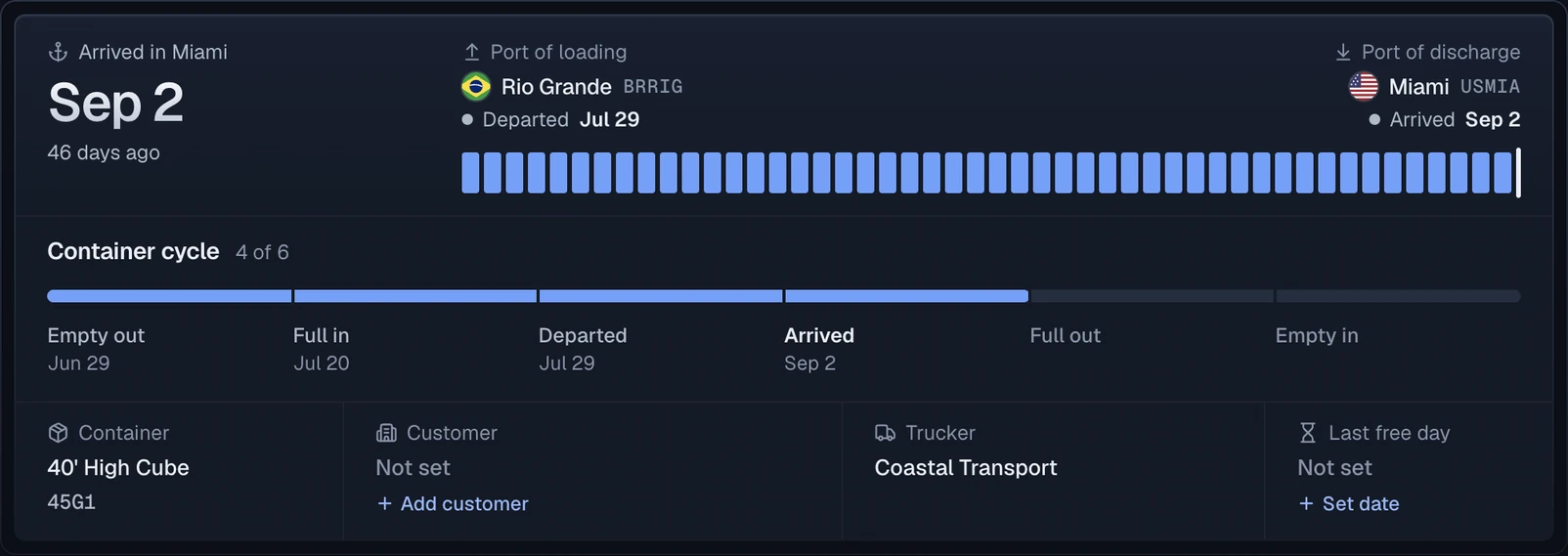
A Busan to Charleston container shows its route as the line reports it: the port of loading, the port of discharge, the final destination and the line's ETA. CargoScope adds no transit-time estimate of its own.
Official sources
Questions
What makes Busan to Charleston different from other long-haul routes?
A long all-water routing to the US Southeast where Busan's hub role means the container may have transshipped before the mainline leg even starts. Charleston has been consolidating operations between its terminals, so the facility working this service can change between sailings rather than staying fixed.
Why do two containers on the same trade arrive weeks apart?
Services on this corridor do not all route the same way, and a box that transships can wait for onward capacity while a direct sailing does not. Comparing the actual event sequence rather than the headline trade lane explains most of the difference.