
What is particular about Mundra to Jebel Ali
A short leg between two large privately developed ports, both of which serve as gateways to substantial inland markets rather than as pure hubs. Jebel Ali's free zone can add handling and documentation steps between discharge and onward movement that look like delay but are procedural.
The milestone that decides the cost
The onward load at the transshipment hub is the event that resolves the most uncertainty on this corridor. Until it exists, the destination ETA is an estimate built on an assumption about capacity that has not yet been confirmed. Once it exists, the remaining journey is comparatively predictable.
- Treat the hub load event as the point the ETA becomes meaningful
- Track the feeder leg and the mainline leg as separate movements
- Expect the destination ETA to move until the onward vessel is confirmed
Tracking this lane in CargoScope
Add the container, Bill of Lading, or booking number once and the milestones above arrive on one record, with ETA changes kept beside the events they affect. One Tracking Credit covers the shipment for its whole lifecycle, so watching a long or transshipped move costs the same as a short direct one.
What you'll see in CargoScope
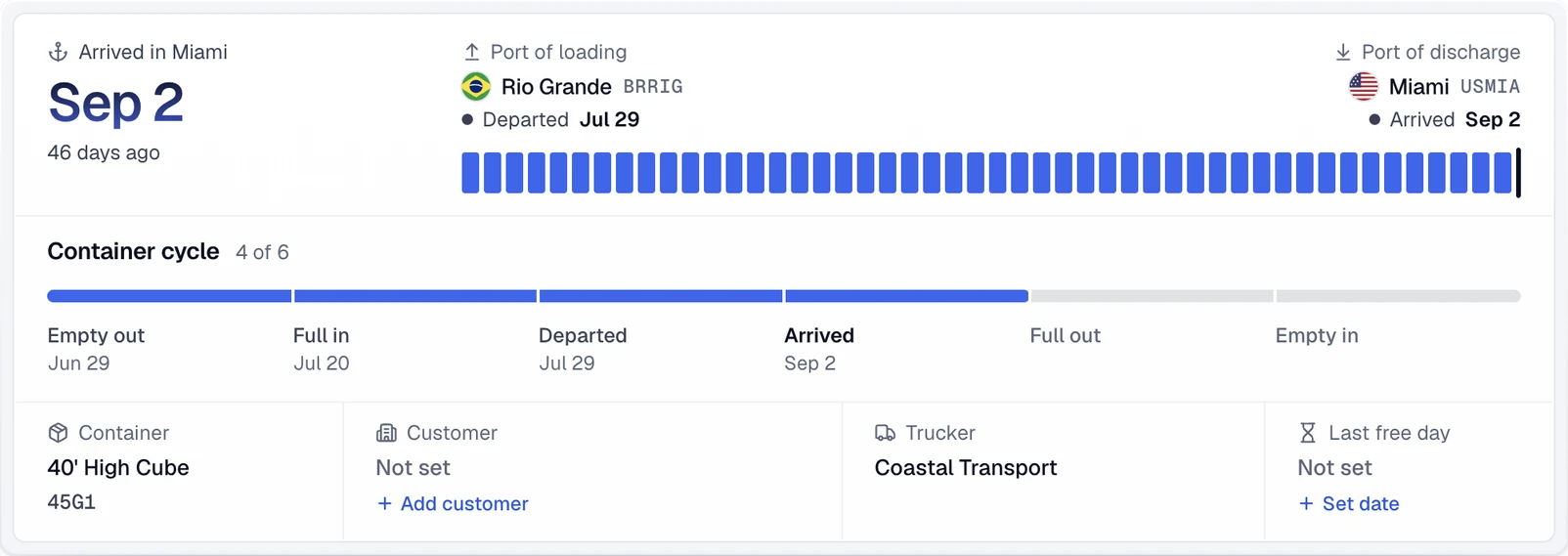
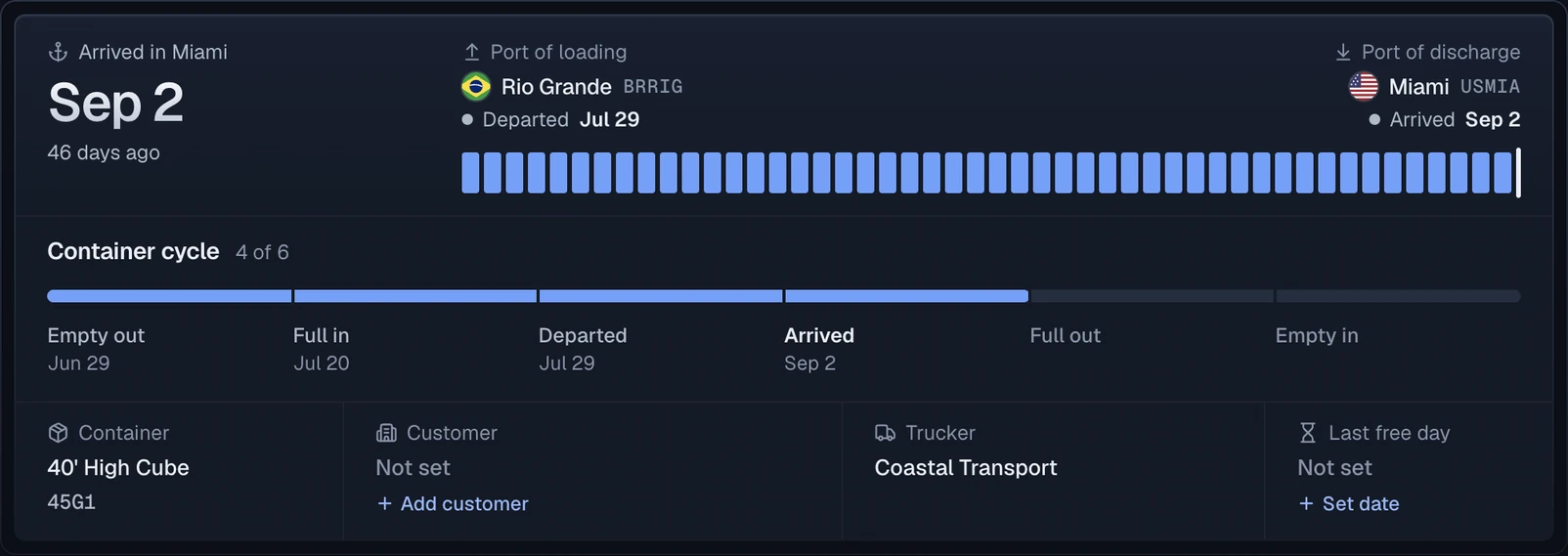
A Mundra to Jebel Ali container shows its route as the line reports it: the port of loading, the port of discharge, the final destination and the line's ETA. CargoScope adds no transit-time estimate of its own.
Questions
What makes Mundra to Jebel Ali different from other transshipped routes?
A short leg between two large privately developed ports, both of which serve as gateways to substantial inland markets rather than as pure hubs. Jebel Ali's free zone can add handling and documentation steps between discharge and onward movement that look like delay but are procedural.
Why is the destination ETA unstable early in the journey?
Because the container has usually not yet been allocated to the mainline vessel that will carry it most of the way. Until the onward load at the transshipment hub is confirmed, the destination estimate rests on an assumption about capacity.