
IHB network and terminal context
Indiana Harbor Belt is a switching and terminal railroad in the Chicago area. Its role is different from a long-distance ocean-container intermodal service: freight can pass between connecting railroads through IHB yards. Blue Island in Riverdale, Illinois and Gibson in Hammond, Indiana are distinct locations in its network. An IHB interchange in a shipment history should prompt a check of the receiving railroad and next destination, rather than an assumption that the container has reached a public pickup ramp.
- IHB provides Chicago-area switching and railroad interchange.
- Distinguish Blue Island and Gibson when interpreting yard references.
- Ask the responsible line-haul railroad about the next movement and final ramp.
IHB rail milestones to watch
Intermodal rail visibility matters after discharge because a container can shift from ocean-carrier planning into inland ramp, train movement, availability, drayage appointment, and final delivery work. CargoScope helps teams keep IHB rail context attached to the shipment instead of treating the rail leg as a separate manual lookup.
- Freight switching network in United States
- Container-number-first tracking workflow
- Rail ramp, availability, and handoff context where available
- Useful for importers, forwarders, drayage teams, and customer updates
Why inland rail visibility affects container operations
The inland leg often creates the operational pressure that customers feel most: a container may arrive at the port, transfer to rail, wait at a ramp, become available, miss an appointment, or create free-time exposure before a team notices. A practical visibility workflow gives operations a shared place to review what changed and decide which containers need action today.
- Reduce status checks across separate portals and emails
- Give customer-facing teams clearer update context
- Spot shipment changes before they become avoidable exceptions
Milestones to monitor around rail moves
Rail-connected container workflows usually depend on a sequence of events rather than one final status. Teams may review vessel discharge, rail departure, rail arrival, ramp availability, outgate, delivery, and empty-return context where that data is available. CargoScope keeps those signals attached to the container record so teams do not lose context between ocean, rail, and truck handoffs.
- Discharge and rail departure context
- Rail arrival, unloaded, and availability signals
- Outgate, delivery appointment, and empty-return context
Container-first rail tracking
Start with the container number when evaluating rail-connected shipment visibility. CargoScope keeps available inland rail events attached to the ocean shipment record so teams can review the handoff without treating the rail leg as a separate shipment.
What you'll see in CargoScope
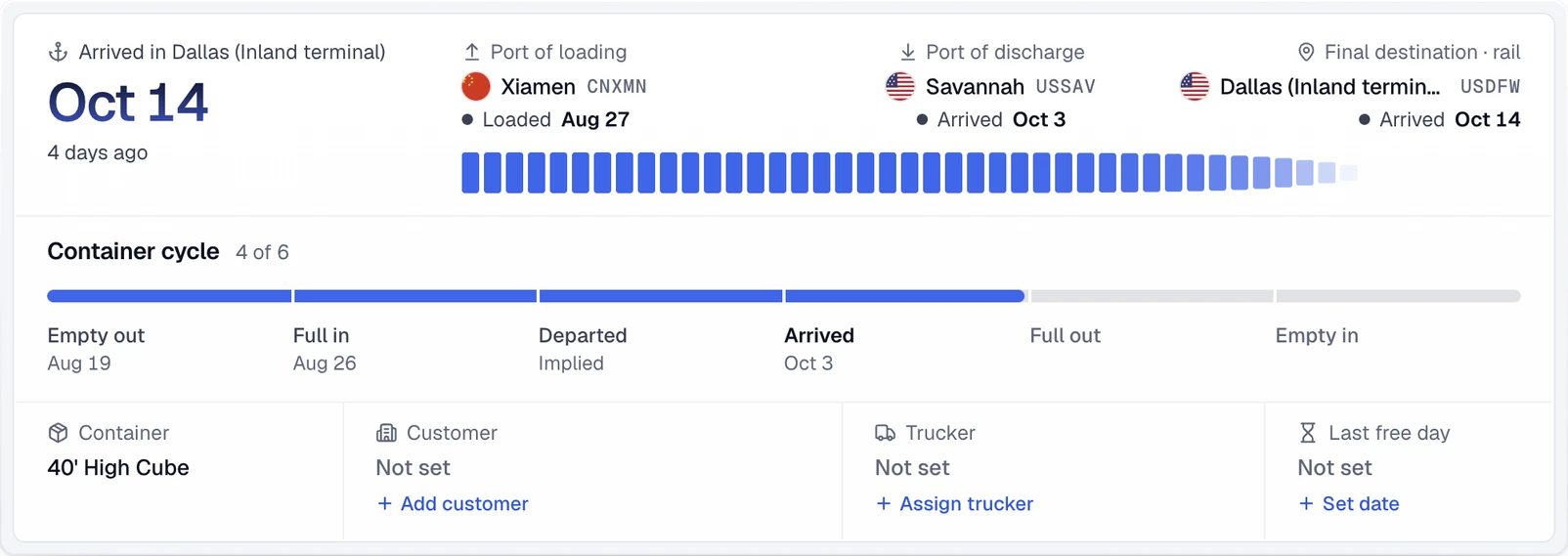
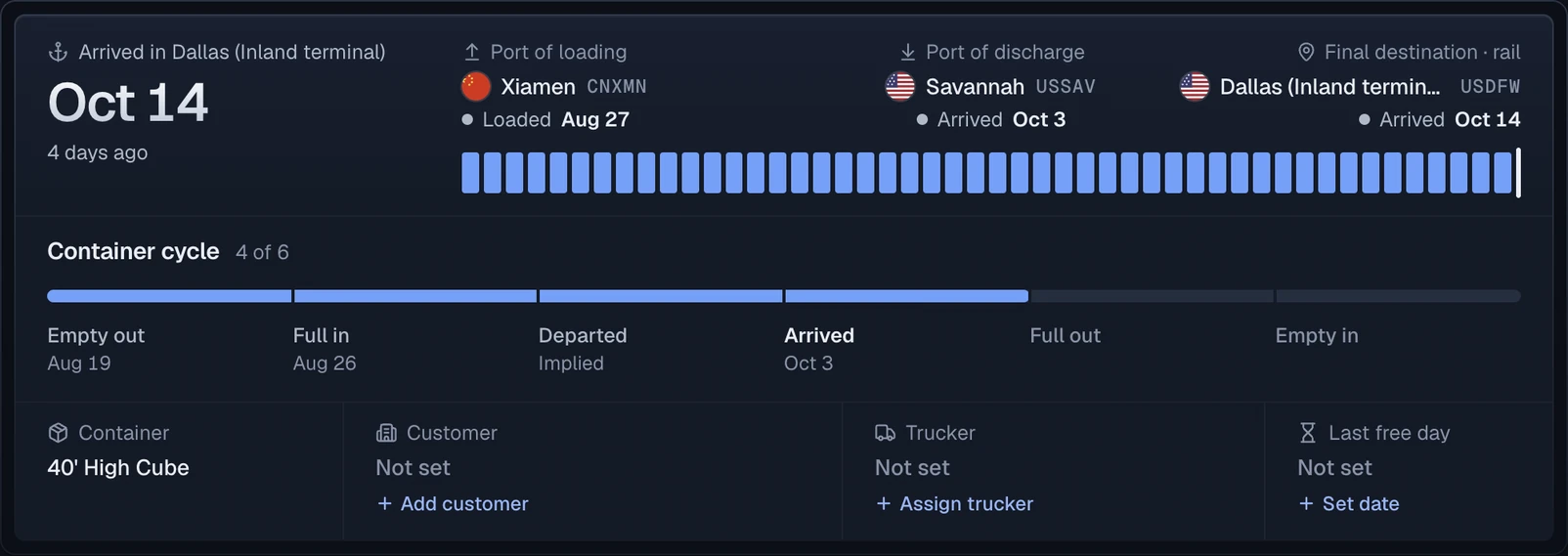
The journey summary keeps the port of discharge and the final destination apart, so a container that continues inland by rail is not read as delivered at the port.
Official sources
Questions
How do I track a Indiana Harbor Belt Railroad rail container move?
Start with the container number in CargoScope. Rail carrier context can help explain the inland leg, but the public workflow is container-number first.
Is CargoScope officially partnered with Indiana Harbor Belt Railroad?
CargoScope does not claim an official rail carrier partnership on this page. It helps teams centralize available container tracking updates and shipment milestones.
Can CargoScope show IHB rail milestones?
CargoScope can help teams review rail and inland milestones where those updates are available for the shipment. It does not invent rail events or promise unavailable carrier data.