
What Shanghai is for
Shanghai is the world's busiest container port, split between the Yangshan deepwater island terminals reached by a long bridge and the older Waigaoqiao facilities on the mainland.
How cargo leaves the gateway
It serves the Yangtze Delta manufacturing base, with river feeder traffic reaching far inland to Yangtze ports.
How containers actually move
East Asian gateways handle enormous export volumes on frequent, tightly scheduled services. For an export container the decisive events happen before the vessel sails: the box must be gated in ahead of the terminal cut-off, documentation must be complete, and the container must be loaded. For an import, these ports are frequently the origin of a long-haul move where early events set expectations for the rest of the voyage.
- High-frequency services running to firm terminal cut-offs
- Gate-in ahead of cut-off is the controlling export event
- Many services are direct, with transshipment used selectively
- Sea-rail and coastal feeder connections serve inland origins
Where time is won or lost
On the export side the concern is not storage but the cut-off. A container that arrives at the terminal after the cut-off does not sail, regardless of the booking, and the next opportunity is a full service interval away. Because sailings are frequent the penalty is often days rather than weeks, but the cost lands on a delivery commitment made at the other end of the world.
- Missing a terminal cut-off usually costs a full service interval
- Loaded-on-vessel is the first event that genuinely confirms departure
- Origin-side delays are rarely recovered during the voyage
The Shanghai detail teams miss
Yangshan and Waigaoqiao are far apart. For export bookings the terminal determines the trucking plan and the cut-off you are actually working to.
Tracking a Shanghai container in CargoScope
Add the container, Bill of Lading, or booking number once and the arrival, discharge, availability, and outgate events arrive on a single record, with ETA changes kept beside the milestones they affect. One Tracking Credit covers the shipment through its full lifecycle.
What you'll see in CargoScope
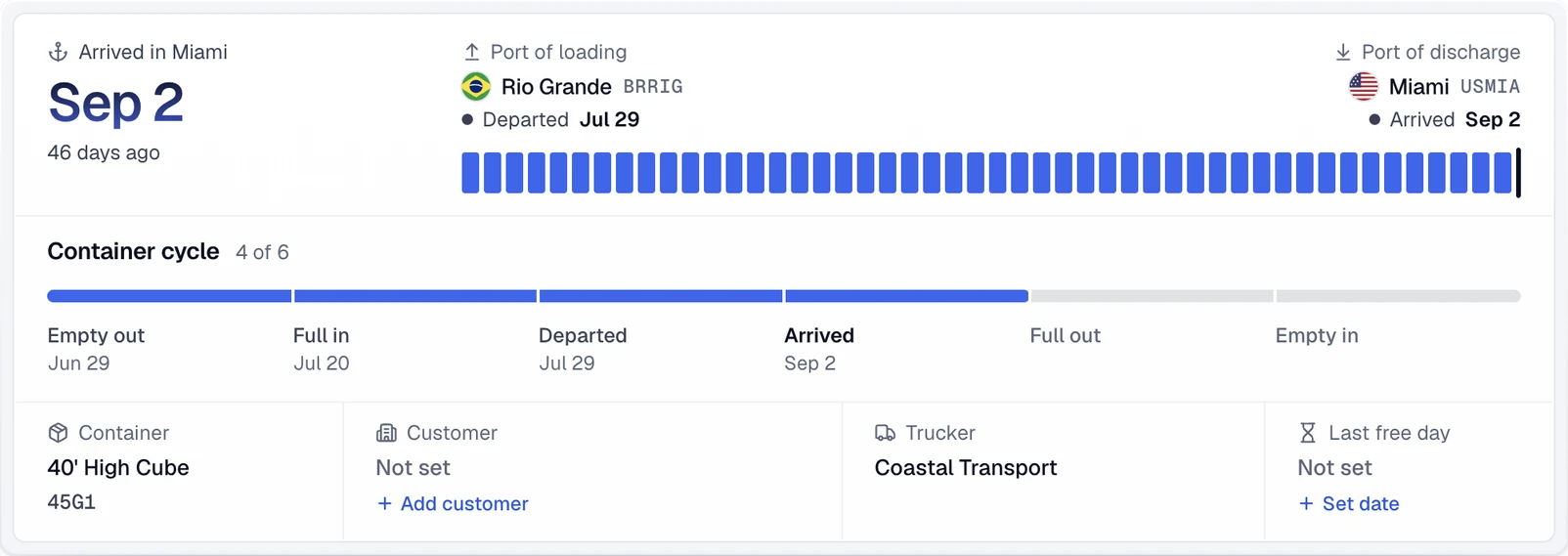
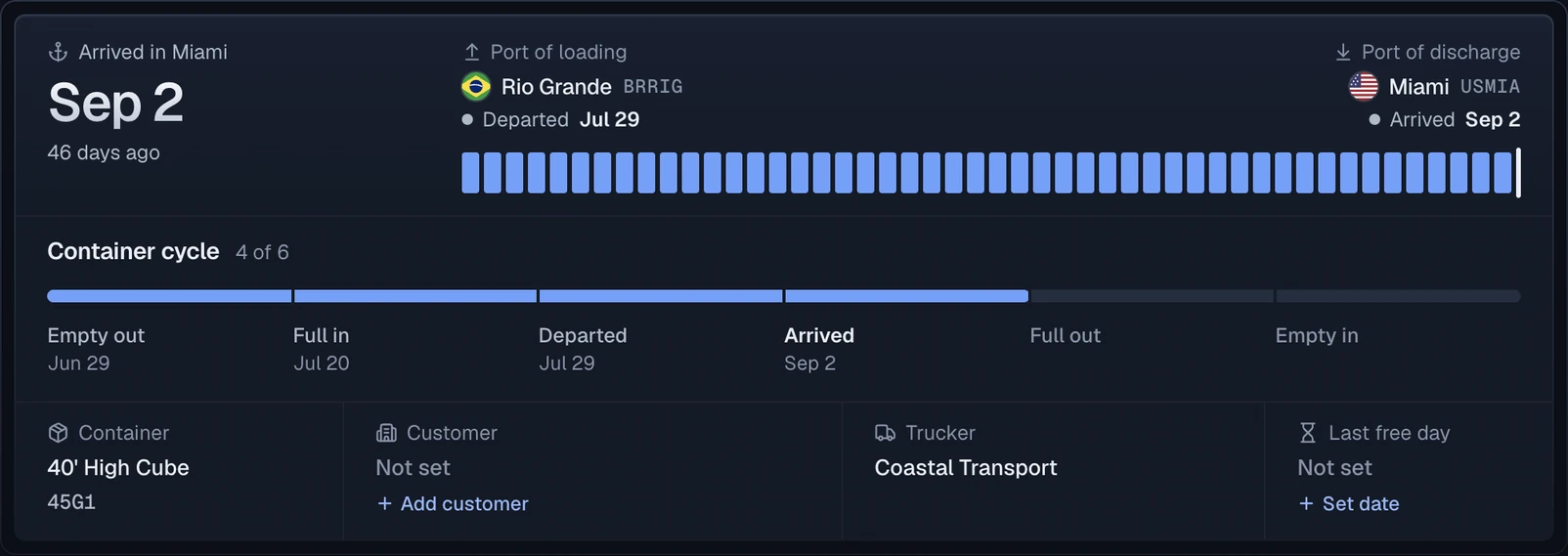
A container discharged at Shanghai shows the port of discharge and the final destination as separate stops, so the move after the vessel stays on the same record.
Questions
What should I know about Shanghai before booking through it?
Shanghai is the world's busiest container port, split between the Yangshan deepwater island terminals reached by a long bridge and the older Waigaoqiao facilities on the mainland.
How do containers move inland from Shanghai?
It serves the Yangtze Delta manufacturing base, with river feeder traffic reaching far inland to Yangtze ports.
What gets missed when tracking a Shanghai container?
Yangshan and Waigaoqiao are far apart. For export bookings the terminal determines the trucking plan and the cut-off you are actually working to.
The booking was confirmed — why did the container not sail?
A booking reserves space; it does not confirm the container reached the terminal before the cut-off. The load event is the only reliable evidence that the box is actually on the vessel.
Which event should an exporter watch most closely?
Gate-in against the terminal cut-off, followed by loaded-on-vessel. Everything downstream depends on those two, and a problem with either is far cheaper to fix before the vessel sails.
Can I track a container by container number?
Yes. CargoScope is designed to help users track ocean containers by container number and monitor shipment visibility from one dashboard.