
What Lagos is for
Lagos handles Nigerian container trade across Apapa and Tin Can Island, with the newer deepwater Lekki facility taking larger vessels.
How cargo leaves the gateway
Road serves Lagos and the Nigerian interior; congestion around the port access roads is a longstanding constraint.
How containers actually move
African gateways are commonly served through transshipment rather than by direct long-haul calls, with mainline vessels calling at a regional hub and feeders distributing onward. Several ports also act as the entry point for landlocked countries, which means the inland leg can be long and can cross borders, adding customs steps well after the ocean movement has finished.
- Feeder services from regional hubs carry much of the volume
- Several gateways serve landlocked countries inland
- Cross-border inland movement adds customs steps after arrival
- Corridor road and rail conditions affect the inland leg
Where time is won or lost
Two distinct risks apply. On the ocean side, the feeder connection can be missed, leaving the container waiting at a hub. On the land side, the inland corridor movement can be long and subject to border formalities, and equipment detention continues throughout that period until the empty is returned.
- Missed feeder connections leave containers waiting at a regional hub
- Inland corridor movement can take considerable time after arrival
- Detention runs across the whole inland journey until the empty returns
The Lagos detail teams miss
Landside access is often the binding constraint rather than berth availability. Confirm which of the Lagos facilities actually worked the container.
Terminals at Lagos
Free-time terms, appointment systems, and gate hours are set per terminal, not per port. Knowing which facility worked the vessel is what makes a pickup plan realistic, and it is the detail most often missing when a container is already accruing charges.
- APM Terminals Apapa
Tracking a Lagos container in CargoScope
Add the container, Bill of Lading, or booking number once and the arrival, discharge, availability, and outgate events arrive on a single record, with ETA changes kept beside the milestones they affect. One Tracking Credit covers the shipment through its full lifecycle.
What you'll see in CargoScope
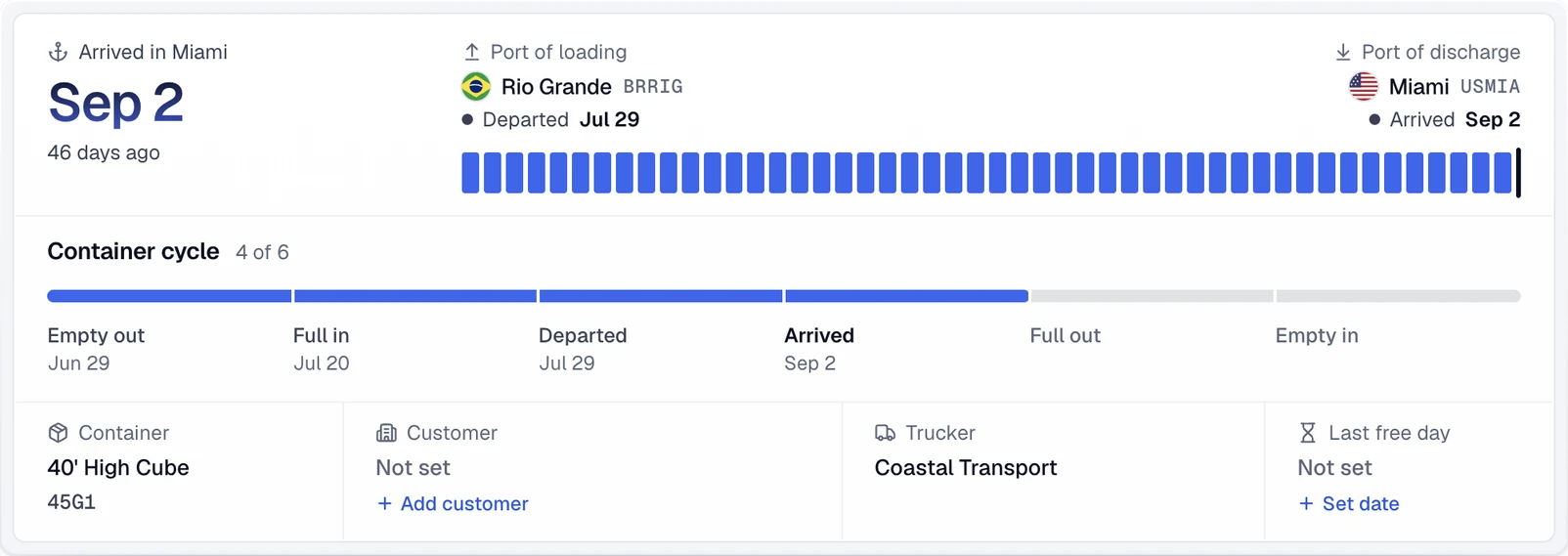
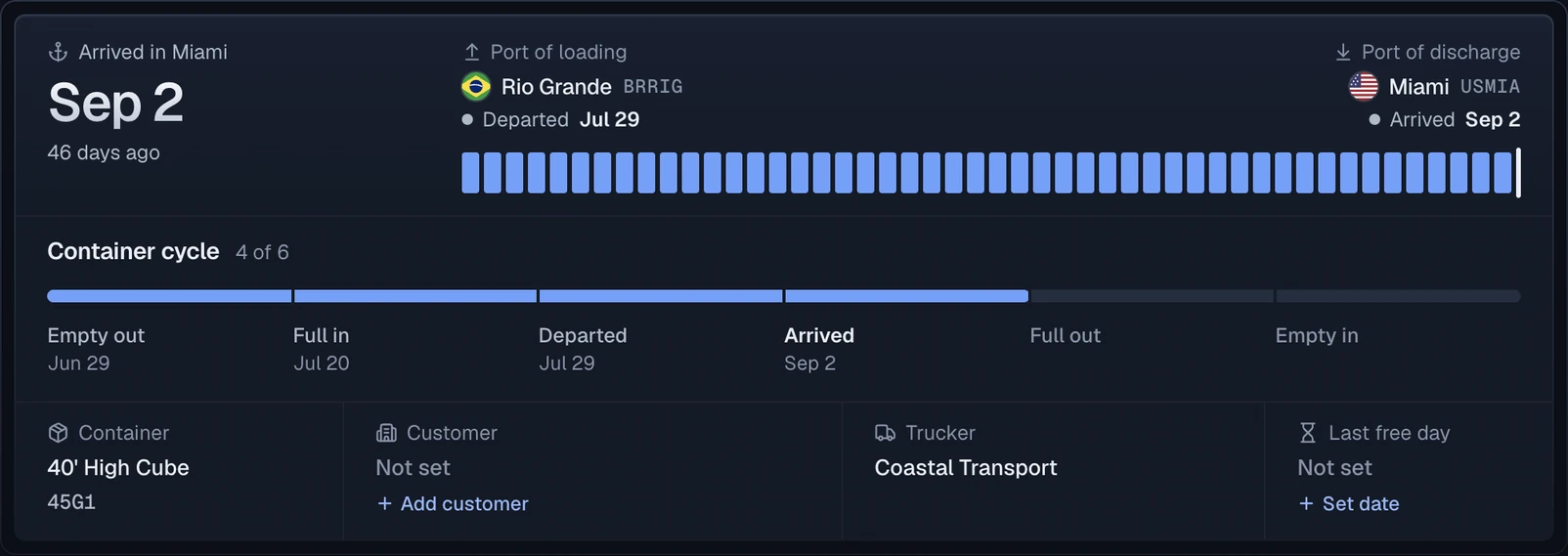
A container discharged at Lagos shows the port of discharge and the final destination as separate stops, so the move after the vessel stays on the same record.
Questions
What should I know about Lagos before booking through it?
Lagos handles Nigerian container trade across Apapa and Tin Can Island, with the newer deepwater Lekki facility taking larger vessels.
How do containers move inland from Lagos?
Road serves Lagos and the Nigerian interior; congestion around the port access roads is a longstanding constraint.
What gets missed when tracking a Lagos container?
Landside access is often the binding constraint rather than berth availability. Confirm which of the Lagos facilities actually worked the container.
Why does my container transship before reaching an African port?
Many African gateways are served by feeder services from regional hubs rather than by direct long-haul calls. The transshipment is the normal routing rather than a problem.
Why does detention keep running after arrival?
Detention relates to how long the equipment is held, and for inland or cross-border destinations that period continues through the corridor movement until the empty container is returned.
Can I track a container by container number?
Yes. CargoScope is designed to help users track ocean containers by container number and monitor shipment visibility from one dashboard.