
What Genoa is for
Genoa is Italy's principal container gateway, hemmed between mountains and sea, which constrains the terminal footprint and the road and rail approaches behind it.
How cargo leaves the gateway
It serves northern Italian industry and reaches toward Switzerland and southern Germany by rail.
How containers actually move inland
The Mediterranean combines two quite different roles. Some gateways are primarily import and export doors for their own hinterland, while others function largely as transshipment hubs where boxes are exchanged between mainline and regional services. A container calling at a Mediterranean port may therefore be arriving at its destination or merely changing vessels, and those two cases need completely different follow-up.
- Some gateways serve a hinterland; others exist mainly to transship
- Regional and short-sea services connect the basin densely
- A call at a hub may be a connection rather than a destination
- Proximity to the Suez routing makes the region sensitive to route changes
Where free time is won or lost
At a transshipment call, the risk is the connection rather than storage: a box that misses its onward vessel waits for the next one, and nothing about that appears in a destination ETA. At a destination call, the usual terminal storage and equipment terms apply. Establishing which kind of call you are looking at is the necessary first step.
- Transshipment calls create connection risk, not storage risk
- Destination calls run ordinary terminal storage and detention terms
- A discharge with no matching load is the clearest signal of a missed connection
The Genoa detail teams miss
The constrained geography means landside access is a real limit. Inland rail congestion behind the port affects delivery more than berth availability does.
Terminals at Genoa
Free-time terms, appointment systems, and gate hours are set per terminal, not per port. Knowing which facility worked the vessel is what makes a pickup plan realistic, and it is the detail most often missing when a container is already accruing charges.
- PSA Genova Pra
- PSA SECH
Tracking a Genoa container in CargoScope
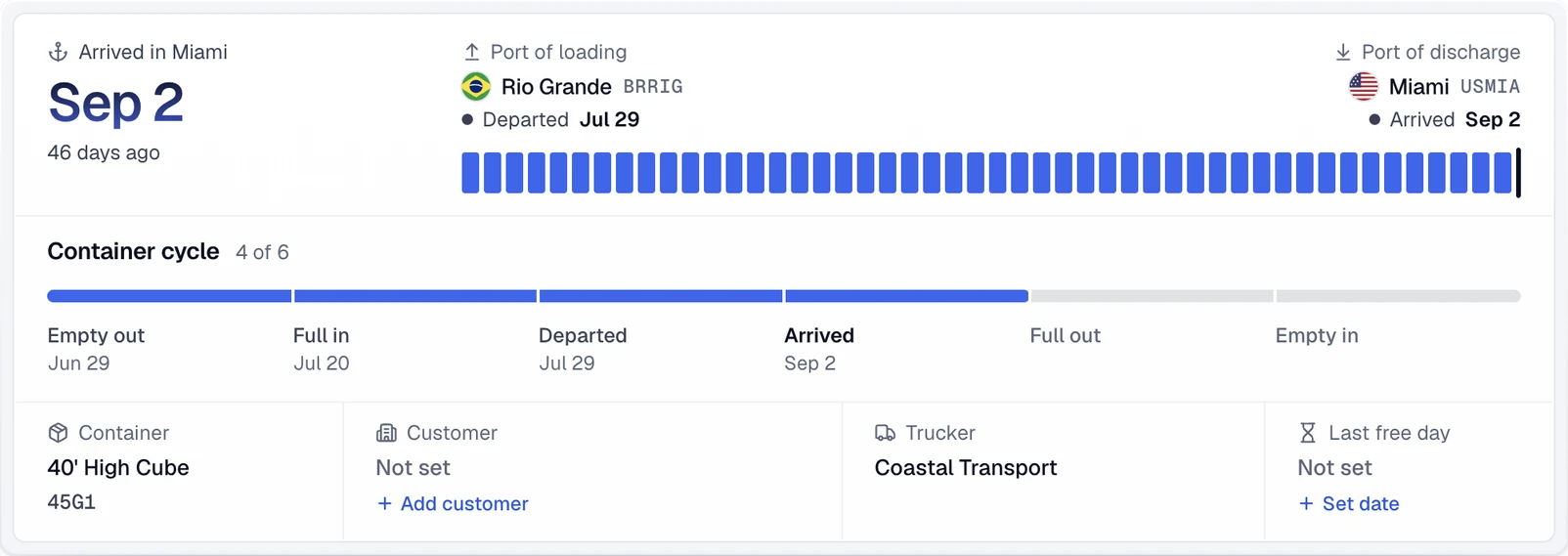
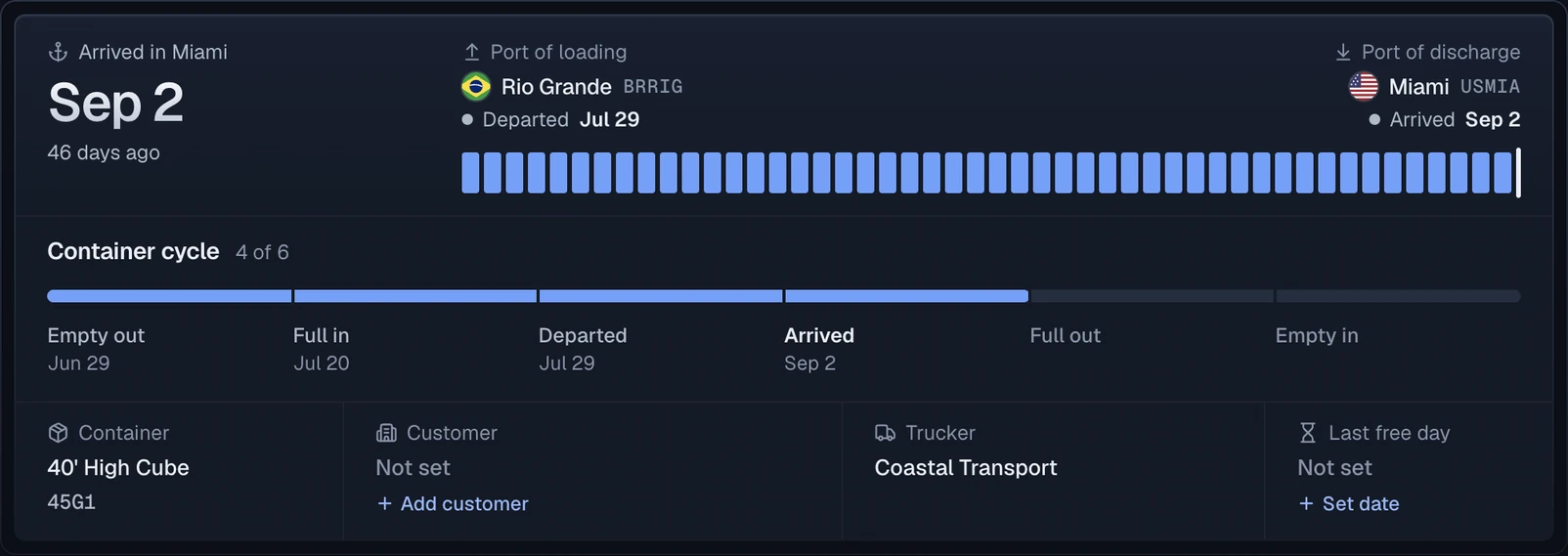
Add the container, Bill of Lading, or booking number once and the arrival, discharge, availability, and outgate events arrive on a single record, with ETA changes kept beside the milestones they affect. One Tracking Credit covers the shipment through its full lifecycle.
What you'll see in CargoScope
A container discharged at Genoa shows the port of discharge and the final destination as separate stops, so the move after the vessel stays on the same record.
Questions
What should I know about Genoa before booking through it?
Genoa is Italy's principal container gateway, hemmed between mountains and sea, which constrains the terminal footprint and the road and rail approaches behind it.
How do containers move inland from Genoa?
It serves northern Italian industry and reaches toward Switzerland and southern Germany by rail.
What gets missed when tracking a Genoa container?
The constrained geography means landside access is a real limit. Inland rail congestion behind the port affects delivery more than berth availability does.
My container discharged here but this is not the destination — why?
Several Mediterranean ports function primarily as transshipment hubs. A discharge there is usually a connection: the container is waiting for a different vessel rather than for collection.
How do I tell a hub call from a destination call?
Look for a load event after the discharge. A discharge followed by a load onto another vessel is a transshipment; a discharge followed by availability and outgate is a destination.
Can I track a container by container number?
Yes. CargoScope is designed to help users track ocean containers by container number and monitor shipment visibility from one dashboard.