
What Chennai is for
Chennai serves southern India's industrial base, particularly automotive manufacturing, and handles container trade for the Tamil Nadu region.
How cargo leaves the gateway
Road and rail serve the southern interior, with inland container depots handling documentation away from the port.
How containers actually move
South Asian gateways draw on large inland catchments served by rail and road, and container trains between inland container depots and the seaport are a normal part of the journey rather than an exception. On the ocean side, long-haul services frequently connect through Middle East or Southeast Asian hubs, so a shipment often combines an inland leg, a feeder or mainline leg, and a transshipment.
- Inland container depots and rail connections feed the seaport
- Long-haul routings commonly transship at a regional hub
- Customs and documentation steps occur at both inland and port stages
- Seasonal weather can interrupt both inland and port operations
Where time is won or lost
Exposure can begin well before the ocean leg. A container held at an inland depot or waiting for a rail slot is already consuming schedule, and that time is invisible in any ocean-focused view. On the import side, the reverse applies: the box may clear the seaport promptly and then face an inland movement of significant distance.
- Inland depot and rail waits consume schedule before the vessel is involved
- Ocean estimates do not describe the inland leg at either end
- Equipment detention runs across the whole cycle, inland legs included
The Chennai detail teams miss
The north-east monsoon can disrupt operations seasonally in ways that annual planning tends to overlook.
Terminals at Chennai
Free-time terms, appointment systems, and gate hours are set per terminal, not per port. Knowing which facility worked the vessel is what makes a pickup plan realistic, and it is the detail most often missing when a container is already accruing charges.
- PSA Chennai
Tracking a Chennai container in CargoScope
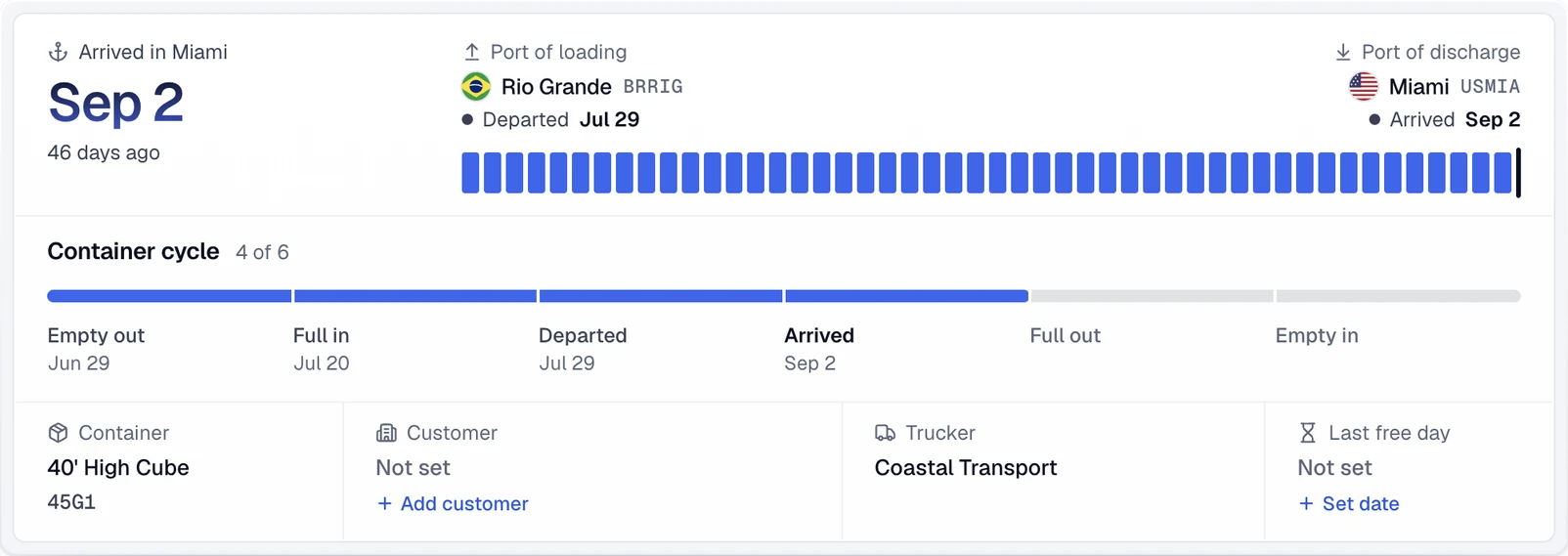
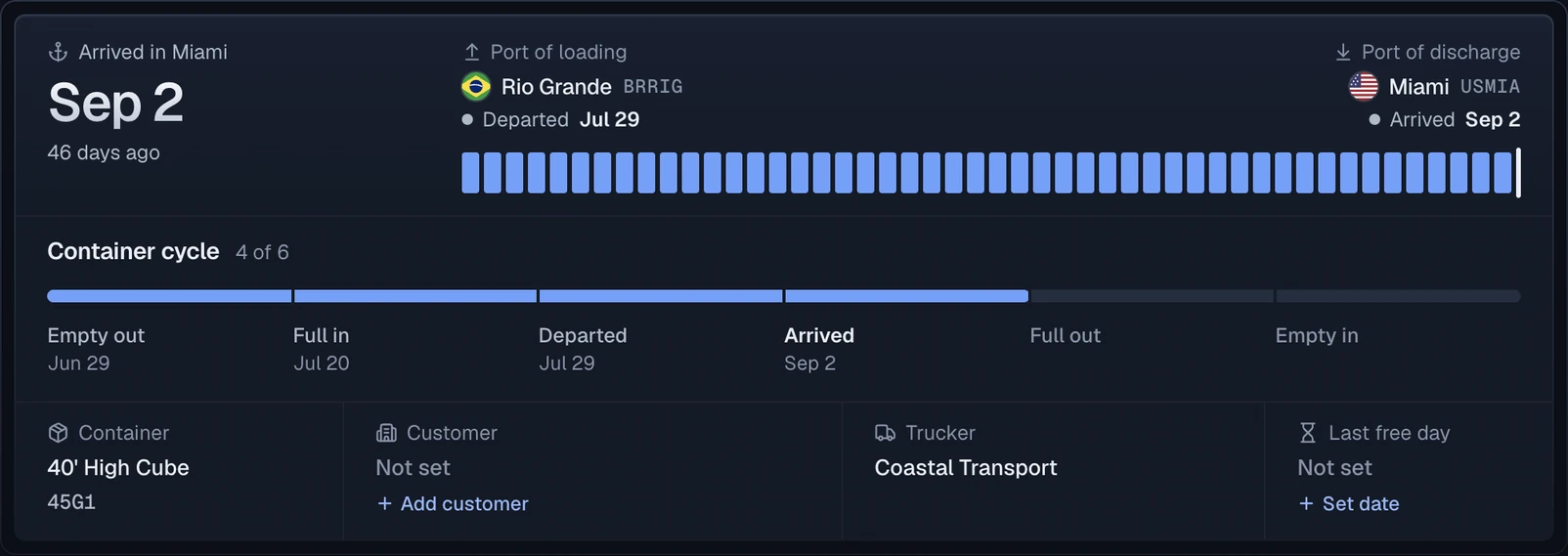
Add the container, Bill of Lading, or booking number once and the arrival, discharge, availability, and outgate events arrive on a single record, with ETA changes kept beside the milestones they affect. One Tracking Credit covers the shipment through its full lifecycle.
What you'll see in CargoScope
A container discharged at Chennai shows the port of discharge and the final destination as separate stops, so the move after the vessel stays on the same record.
Questions
What should I know about Chennai before booking through it?
Chennai serves southern India's industrial base, particularly automotive manufacturing, and handles container trade for the Tamil Nadu region.
How do containers move inland from Chennai?
Road and rail serve the southern interior, with inland container depots handling documentation away from the port.
What gets missed when tracking a Chennai container?
The north-east monsoon can disrupt operations seasonally in ways that annual planning tends to overlook.
Why does the journey start well before the port?
Many South Asian shipments begin at an inland container depot and move to the seaport by rail or road. That leg is part of the schedule even though it precedes any ocean event.
Does a hub transshipment change what I should watch?
Yes. Once a hub is involved, the onward load at that hub becomes the event that resolves most of the uncertainty in the destination estimate.
Can I track a container by container number?
Yes. CargoScope is designed to help users track ocean containers by container number and monitor shipment visibility from one dashboard.