
What Callao is for
Callao is Peru's main container gateway, adjacent to Lima, handling the country's international trade including significant agricultural and mineral exports.
How cargo leaves the gateway
Road serves Lima and climbs into the Andean interior, where distances and terrain are demanding.
How containers actually move
Latin American gateways handle a trade mix weighted toward agricultural, perishable, and commodity cargo alongside manufactured goods, and that mix shapes operations. Inspection and documentation requirements are a substantial part of the timeline, particularly for products subject to phytosanitary control. Services connect north to the US, east to Europe, and through regional hubs for longer routings.
- Agricultural and perishable cargo brings inspection requirements
- Documentation steps form a meaningful share of the total timeline
- Services run to North America, Europe, and via regional hubs
- Reefer equipment adds temperature monitoring to the journey
Where time is won or lost
Export-side formalities are the usual constraint, and they occur before any ocean event exists to watch. For reefer cargo the stakes are higher because the cargo itself deteriorates, so a delay is not only a scheduling problem. On the import side, inland distances from the coast can be considerable.
- Inspection and documentation holds occur before the vessel is involved
- Reefer cargo makes delay a cargo-integrity problem, not just a schedule one
- Inland distances from the coast can be long on both import and export
The Callao detail teams miss
Reefer exports are a substantial part of the mix, so delays carry cargo-integrity consequences beyond scheduling.
Terminals at Callao
Free-time terms, appointment systems, and gate hours are set per terminal, not per port. Knowing which facility worked the vessel is what makes a pickup plan realistic, and it is the detail most often missing when a container is already accruing charges.
- APM Terminals Callao
Tracking a Callao container in CargoScope
Add the container, Bill of Lading, or booking number once and the arrival, discharge, availability, and outgate events arrive on a single record, with ETA changes kept beside the milestones they affect. One Tracking Credit covers the shipment through its full lifecycle.
What you'll see in CargoScope
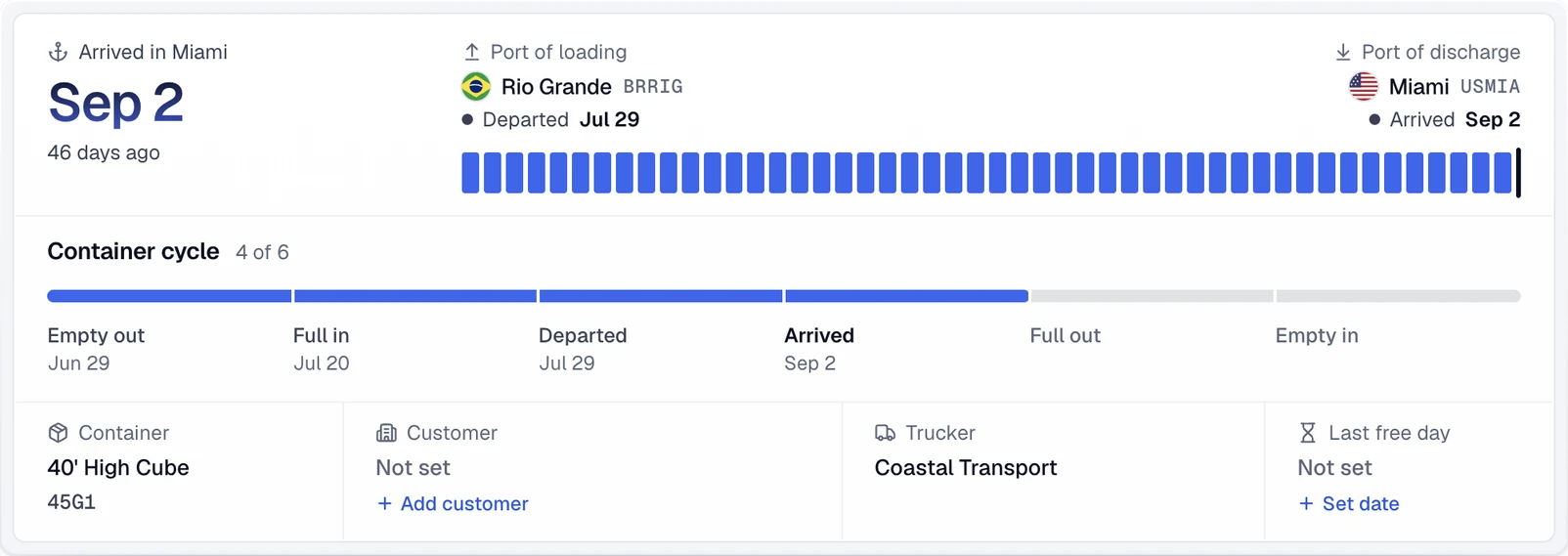
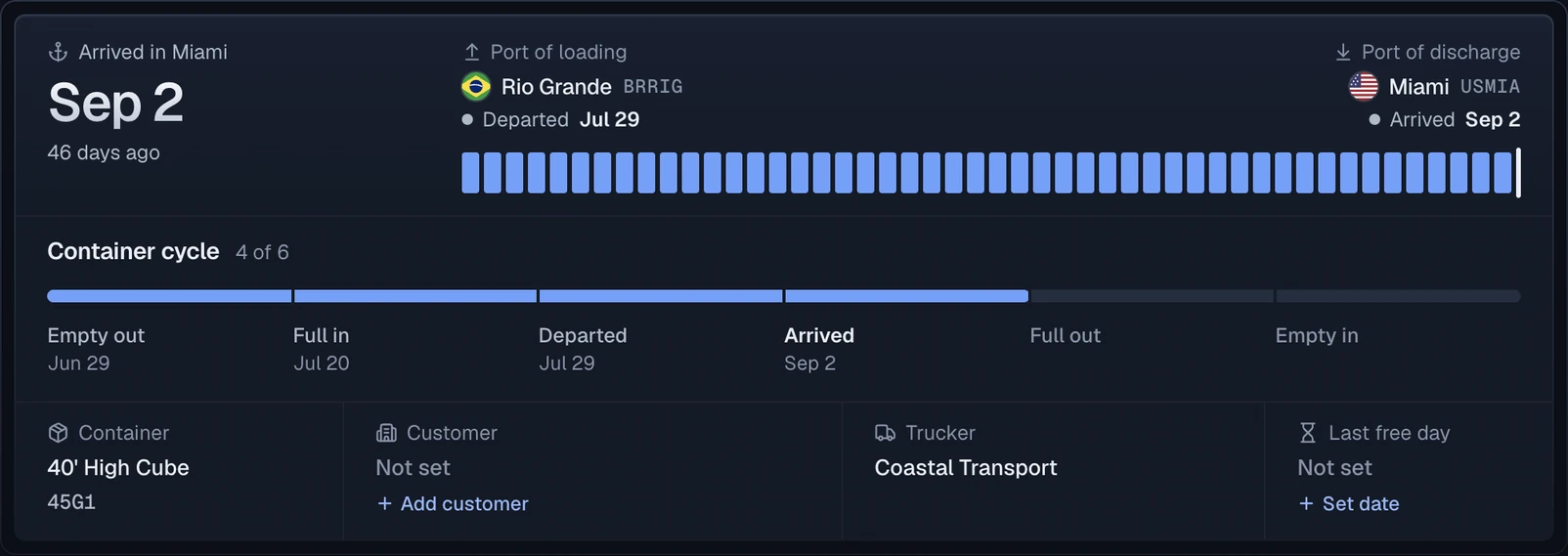
A container discharged at Callao shows the port of discharge and the final destination as separate stops, so the move after the vessel stays on the same record.
Questions
What should I know about Callao before booking through it?
Callao is Peru's main container gateway, adjacent to Lima, handling the country's international trade including significant agricultural and mineral exports.
How do containers move inland from Callao?
Road serves Lima and climbs into the Andean interior, where distances and terrain are demanding.
What gets missed when tracking a Callao container?
Reefer exports are a substantial part of the mix, so delays carry cargo-integrity consequences beyond scheduling.
Why do delays here happen before departure?
Export formalities and inspections take place before loading, and a container held for those reasons has not generated any ocean event yet. Watching the gate-in and load events is how that becomes visible.
Does perishable cargo need different attention?
Yes. With reefer shipments a delay affects the cargo as well as the schedule, so the value of noticing a hold early is considerably higher.
Can I track a container by container number?
Yes. CargoScope is designed to help users track ocean containers by container number and monitor shipment visibility from one dashboard.