
What is particular about Tianjin to Seattle
Tianjin is the maritime gateway for Beijing and the northern Chinese interior, giving this pairing a cargo mix tied to the capital region rather than the coastal manufacturing belt. Bohai Gulf ice and fog can affect origin approach timing in winter, which the ocean schedule does not anticipate.
The milestone that decides the cost
On this corridor the discharge event is the one to watch. Everything before it is schedule information you can plan around; everything after it is a clock. The gap between discharge and outgate is where demurrage exposure is created, and it is the gap most teams discover late because it is not visible in a sailing schedule.
- Discharge starts the free-time clock at most terminals
- Outgate confirms the box actually left, not that it was merely available
- Empty return closes the cycle and ends detention exposure
Where the container lands at Seattle
Which terminal works the vessel changes what happens next: free-time terms, appointment systems, and rail access are set per terminal rather than per port. Two containers off the same vessel can behave differently for that reason alone, so it is worth knowing the destination facility before planning the pickup.
- Terminal 5
- Terminal 18
- Terminal 30
- Terminal 46
Tracking this lane in CargoScope
Add the container, Bill of Lading, or booking number once and the milestones above arrive on one record, with ETA changes kept beside the events they affect. One Tracking Credit covers the shipment for its whole lifecycle, so watching a long or transshipped move costs the same as a short direct one.
What you'll see in CargoScope
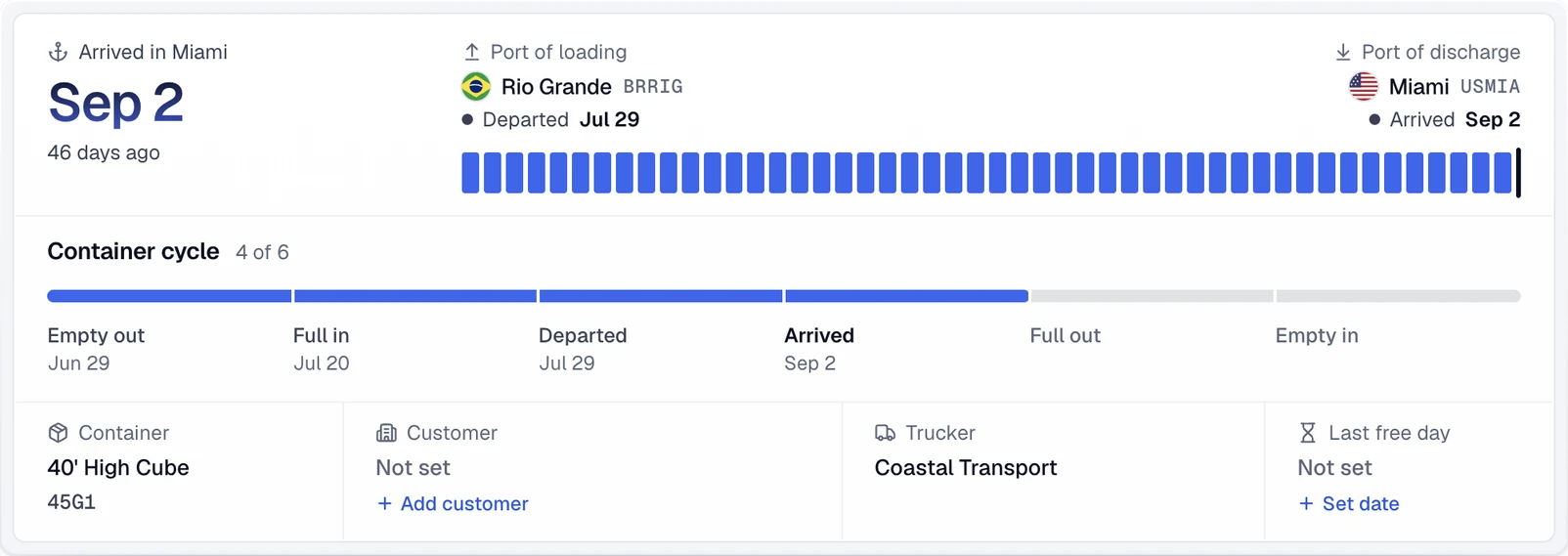
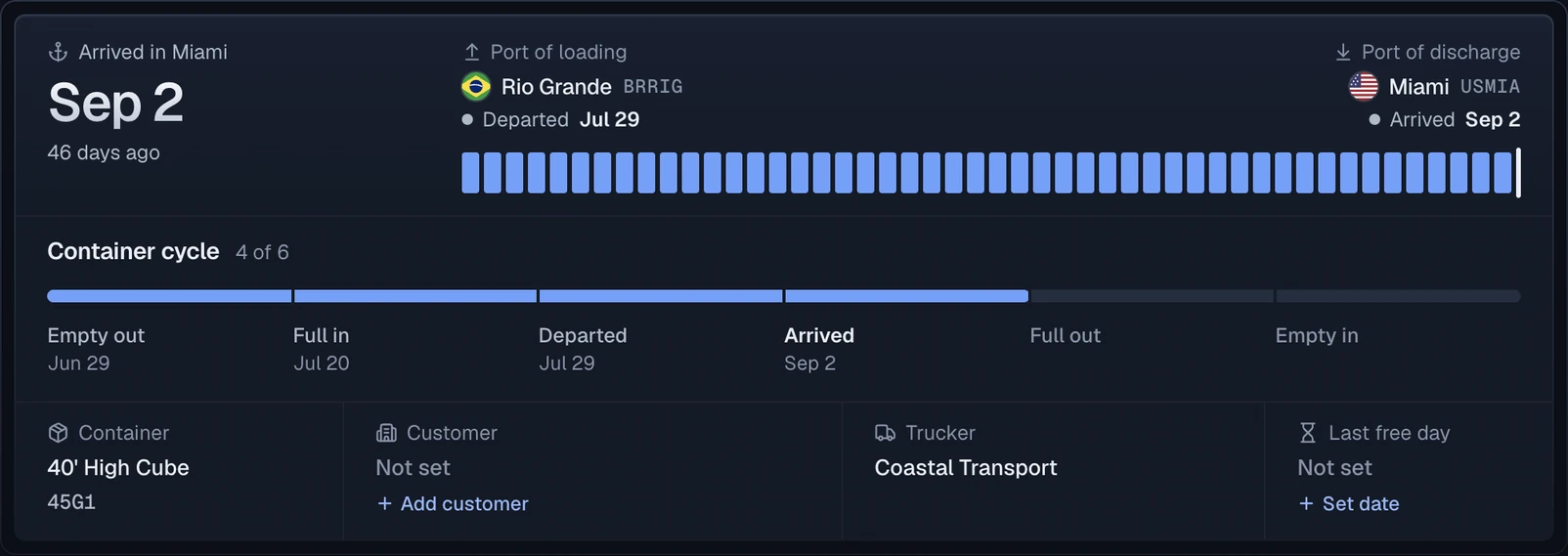
A Tianjin to Seattle container shows its route as the line reports it: the port of loading, the port of discharge, the final destination and the line's ETA. CargoScope adds no transit-time estimate of its own.
Official sources
Questions
What makes Tianjin to Seattle different from other transpacific routes?
Tianjin is the maritime gateway for Beijing and the northern Chinese interior, giving this pairing a cargo mix tied to the capital region rather than the coastal manufacturing belt. Bohai Gulf ice and fog can affect origin approach timing in winter, which the ocean schedule does not anticipate.
Why does a transpacific container sit after it arrives?
Arrival and availability are different events. A vessel can arrive on schedule while the container waits on discharge sequence, rail assignment, chassis supply, or an appointment slot. Watching discharge and outgate separately shows which of those is actually holding the box.