
What is particular about Shanghai to Rotterdam
The flagship Asia-Europe pairing, and the one most exposed to the Suez versus Cape of Good Hope routing decision, which carriers make and change without the shipment record announcing it. Shanghai loading splits between Yangshan and Waigaoqiao, so the origin terminal matters for the export cut-off even though the destination is fixed.
The milestone that decides the cost
The mainline discharge at the European hub is the handover point worth watching. It is where the shipment stops being one long ocean leg and becomes a series of shorter onward moves, each with its own timing. Teams that treat hub discharge as the finish line consistently underestimate the remaining journey.
- Treat hub discharge as a handover, not as arrival at destination
- Track onward feeder, barge, or rail legs as separate events
- Re-confirm the inland delivery plan after the routing is known
Tracking this lane in CargoScope
Add the container, Bill of Lading, or booking number once and the milestones above arrive on one record, with ETA changes kept beside the events they affect. One Tracking Credit covers the shipment for its whole lifecycle, so watching a long or transshipped move costs the same as a short direct one.
What you'll see in CargoScope
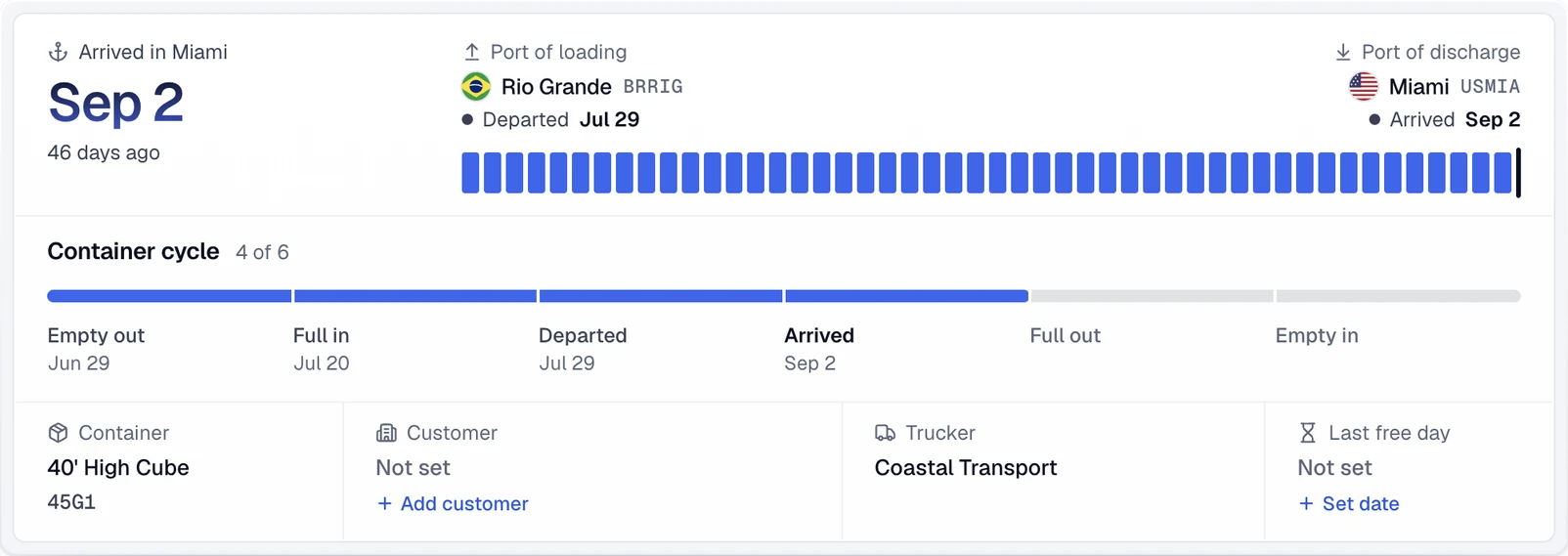
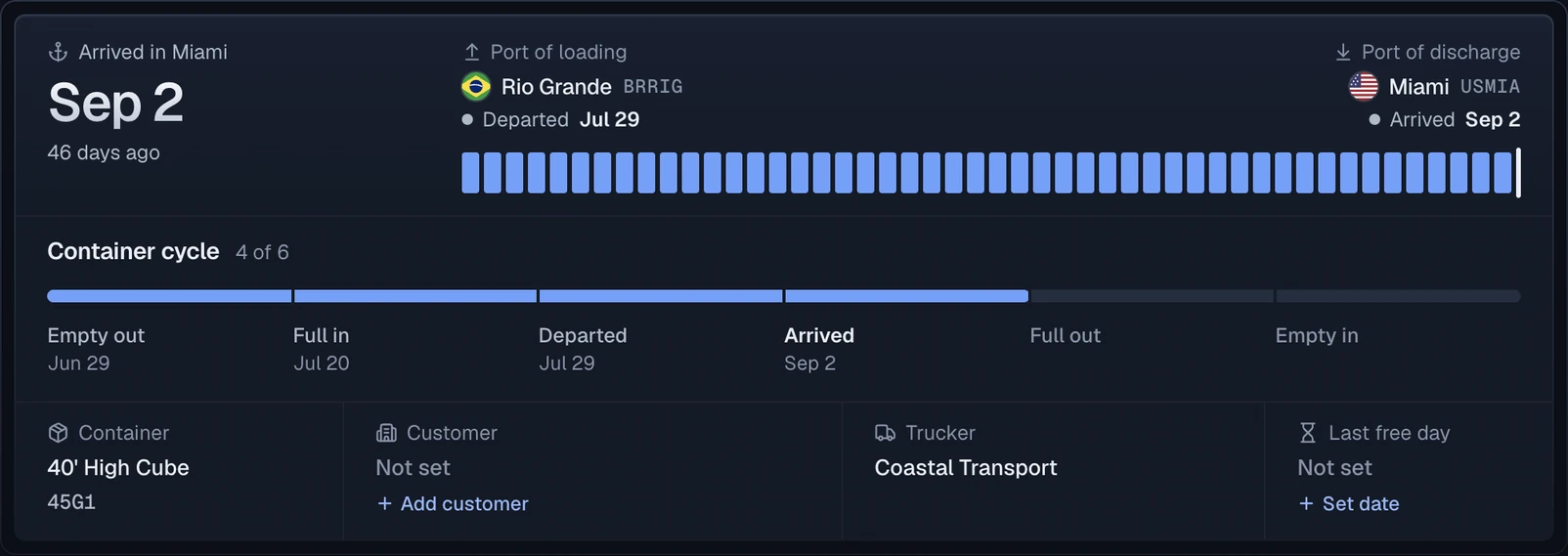
A Shanghai to Rotterdam container shows its route as the line reports it: the port of loading, the port of discharge, the final destination and the line's ETA. CargoScope adds no transit-time estimate of its own.
Questions
What makes Shanghai to Rotterdam different from other Asia–Europe routes?
The flagship Asia-Europe pairing, and the one most exposed to the Suez versus Cape of Good Hope routing decision, which carriers make and change without the shipment record announcing it. Shanghai loading splits between Yangshan and Waigaoqiao, so the origin terminal matters for the export cut-off even though the destination is fixed.
Why did the arrival window change so much mid-voyage?
Routing on this corridor is a carrier decision that can change after departure, and the alternatives differ substantially in distance. A revised arrival usually reflects a routing or rotation change rather than an error in the original estimate.