
What is particular about Rotterdam to Norfolk
A transatlantic pairing between Europe's largest gateway and a unified Virginia port system where containers can be repositioned between terminals after discharge. The short crossing leaves no room to recover a missed Rotterdam cut-off.
The milestone that decides the cost
Origin gate-in and the load event carry more weight on this corridor than on longer trades. With a short crossing and frequent sailings, missing a cut-off usually means a full service interval of delay rather than a few days. Confirming the container was actually loaded, not merely booked, is the highest-value check before the vessel sails.
- Confirm gate-in against the export cut-off, not against the sailing date
- Treat loaded-on-vessel as the first genuinely reliable event
- Re-check availability against the vessel's US rotation, not just arrival
Tracking this lane in CargoScope
Add the container, Bill of Lading, or booking number once and the milestones above arrive on one record, with ETA changes kept beside the events they affect. One Tracking Credit covers the shipment for its whole lifecycle, so watching a long or transshipped move costs the same as a short direct one.
What you'll see in CargoScope
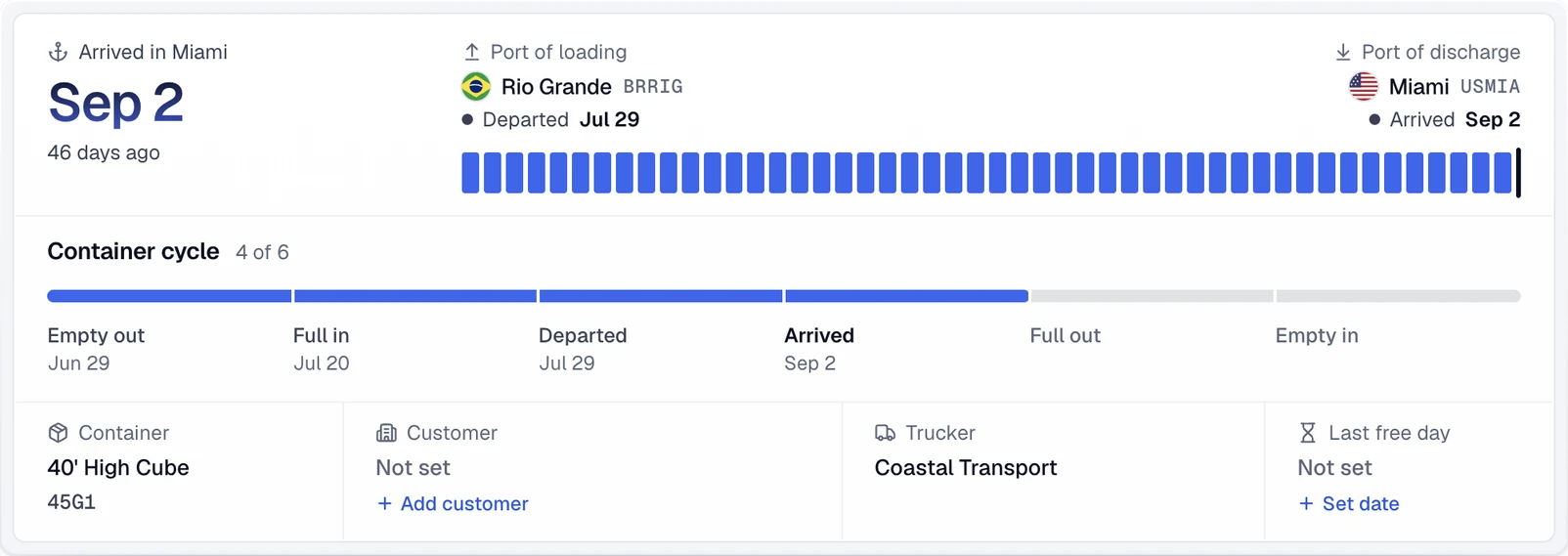
A Rotterdam to Norfolk container shows its route as the line reports it: the port of loading, the port of discharge, the final destination and the line's ETA. CargoScope adds no transit-time estimate of its own.
Official sources
Questions
What makes Rotterdam to Norfolk different from other transatlantic routes?
A transatlantic pairing between Europe's largest gateway and a unified Virginia port system where containers can be repositioned between terminals after discharge. The short crossing leaves no room to recover a missed Rotterdam cut-off.
Why did a short transatlantic move still miss the delivery date?
A short crossing offers little room to recover. A container that misses its export cut-off typically waits for the next sailing on that service, so a delay measured in hours at the origin can become a delay measured in days at the destination.