
What is particular about Kingston to Miami
Kingston is a Caribbean transshipment hub, so this short pairing usually represents the final leg of a longer journey that began elsewhere. Hurricane season is a genuine seasonal risk at the origin end that has no equivalent on transpacific routes.
The milestone that decides the cost
Origin gate-in is the event that matters most here. On a short crossing, a container that clears origin formalities on time will usually behave predictably, and one that does not has already lost the majority of its recoverable slack. Confirming the box physically entered the origin terminal, rather than that it was booked, is the single most useful early check.
- Confirm physical gate-in rather than relying on the booking record
- Watch for inspection and hold conditions before departure
- Plan the inland leg against availability, not against vessel arrival
Where the container lands at Miami
Which terminal works the vessel changes what happens next: free-time terms, appointment systems, and rail access are set per terminal rather than per port. Two containers off the same vessel can behave differently for that reason alone, so it is worth knowing the destination facility before planning the pickup.
- South Florida Container Terminal
- PortMiami Terminal Operating Company (POMTOC)
Tracking this lane in CargoScope
Add the container, Bill of Lading, or booking number once and the milestones above arrive on one record, with ETA changes kept beside the events they affect. One Tracking Credit covers the shipment for its whole lifecycle, so watching a long or transshipped move costs the same as a short direct one.
What you'll see in CargoScope
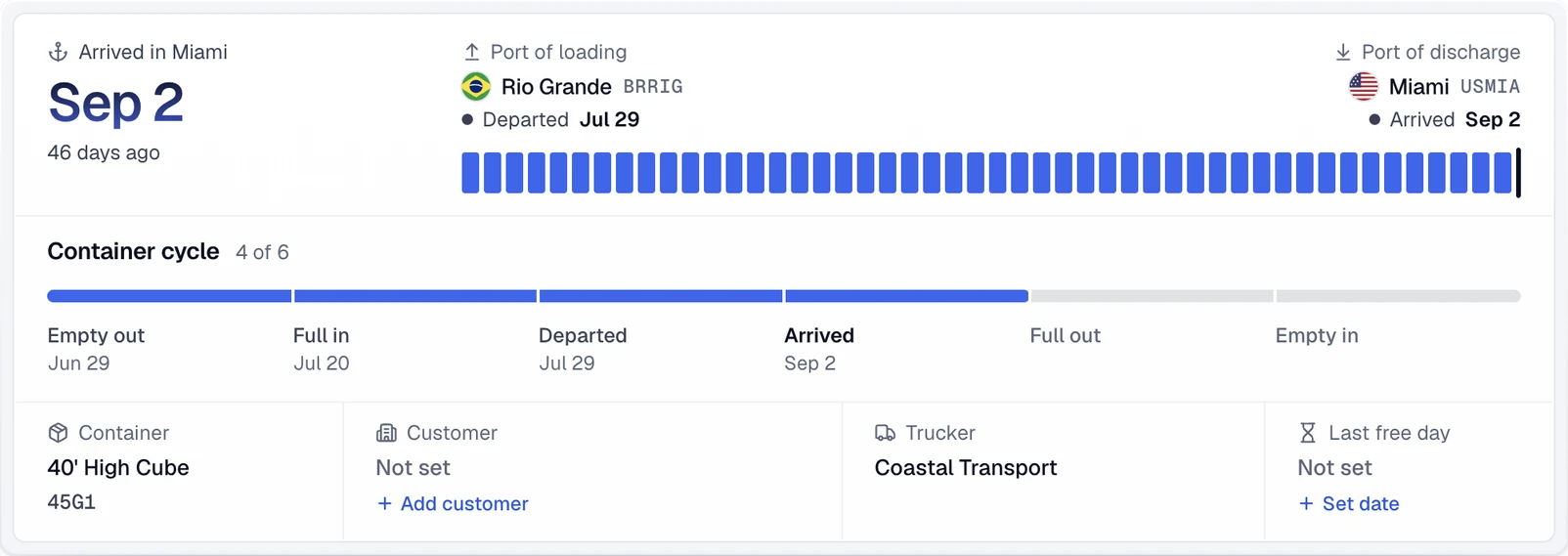
A Kingston to Miami container shows its route as the line reports it: the port of loading, the port of discharge, the final destination and the line's ETA. CargoScope adds no transit-time estimate of its own.
Official sources
Questions
What makes Kingston to Miami different from other short-sea routes?
Kingston is a Caribbean transshipment hub, so this short pairing usually represents the final leg of a longer journey that began elsewhere. Hurricane season is a genuine seasonal risk at the origin end that has no equivalent on transpacific routes.
Why do delays on this corridor happen before the vessel sails?
The water leg is short, so origin formalities and inspections make up a larger proportion of total time. A container held at origin has little opportunity to make the time back at sea.